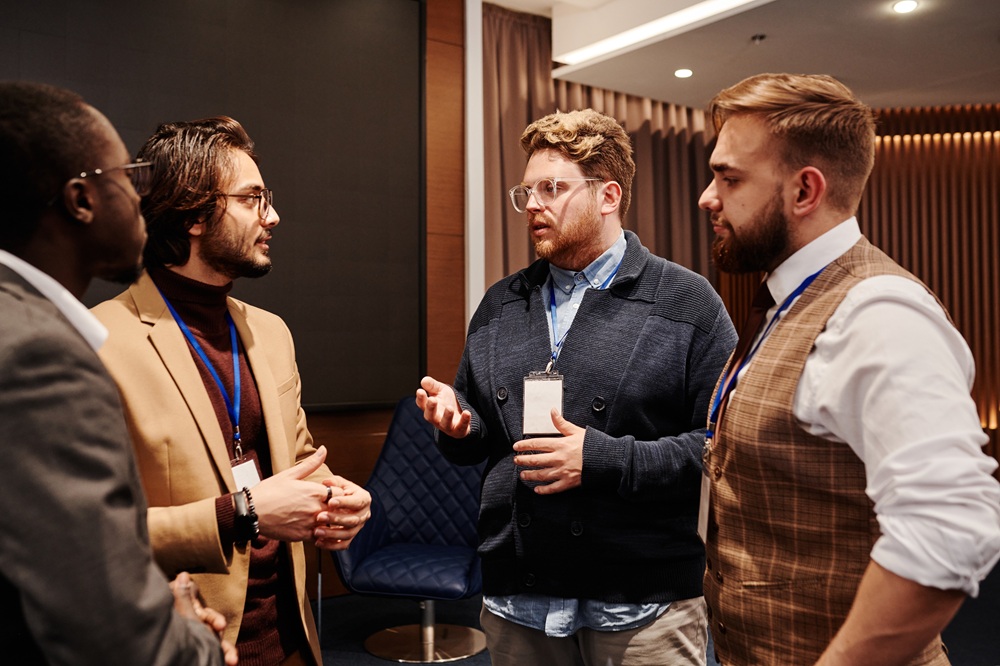


A Community Development Perspective
The strength of any civilization lies not merely in the resources it possesses, but in the unity and cooperation of its people. Communities rise when individuals work together toward shared goals, and they decline when energy is wasted in rivalry, duplication, and internal competition.
One of the critical challenges facing many Muslim communities today is the difference between working together and working against each other. While this difference may appear subtle, its impact on community development, economic growth, and institutional strength is profound.
The Islamic economic vision was never designed for fragmented individualism. Rather, it is built upon cooperation, trust, collective prosperity, and ethical collaboration.
The Qur’anic Foundation of Cooperation
Allah (swt) provides a clear principle for community cooperation in the Qur’an:
“And cooperate in righteousness and piety, and do not cooperate in sin and aggression.”
(Qur’an 5:2)
This verse establishes a fundamental rule for societal development: progress must be built through cooperation.
Islam encourages individuals to bring their talents, ideas, and initiatives to the community. However, these efforts should strengthen one another rather than weaken one another through unnecessary competition or duplication.
When people support each other’s initiatives, the community becomes stronger. When people undermine or replicate initiatives out of rivalry, the community becomes divided.
What Does “Working Together” Mean?
Working together means recognizing that community success is greater than individual success. It involves collaboration, partnership, and mutual support for initiatives that serve the greater good.
When someone launches a project, business, or social initiative that benefits the community, the natural response should not be rivalry but constructive engagement.
Working together may include:
1. Supporting Existing Initiatives
Instead of creating a competing initiative, individuals can join forces with the existing project.
This may involve:
- Investing resources
- Providing expertise
- Expanding the project to new regions
- Helping scale the initiative
By doing so, the initiative becomes stronger and the community benefits from concentrated effort rather than fragmented energy.
2. Creating Complementary Solutions
If someone is interested in the same field, they can develop complementary services rather than competing ones.
For example:
If someone establishes:
- a halal certification platform
Others can develop:
- halal logistics
- halal training programs
- halal compliance technology
- halal supply chain services
This creates an ecosystem rather than a rivalry.
3. Expanding Impact Together
Instead of dividing markets, communities can expand markets together.
This transforms the mindset from:
“How can I compete?”
to
“How can we grow this together?”
This shift in thinking is the foundation of a healthy economic ecosystem.
What Does “Working Against Each Other” Mean?
Working against each other often appears in subtle forms. It is not always open hostility. Instead, it may manifest through duplication, fragmentation, and rivalry.
Some common examples include:
1. Copy-Pasting Initiatives
Someone launches a promising project for the community. Instead of supporting it, others replicate the same idea and compete for the same audience.
This results in:
- divided resources
- diluted credibility
- weaker institutions
Rather than one strong platform, the community ends up with many weak ones.
2. Market Fragmentation
When multiple competing initiatives arise within the same small community, each one struggles to survive.
Instead of building a strong institution, the community creates several fragile ones that cannot sustain long-term impact.
3. Ego-Based Leadership
Sometimes the issue is not the initiative itself but the desire to lead rather than to contribute.
When ego replaces purpose, collaboration becomes difficult and community progress slows down.
The Prophetic Model of Cooperation
The Prophet Muhammad ﷺ established a society based on mutual support and brotherhood.
He said:
“The believers, in their mutual love, mercy, and compassion, are like one body; when one limb suffers, the whole body responds with sleeplessness and fever.”
(Sahih Bukhari & Muslim)
This hadith illustrates the nature of a healthy community. Each member strengthens the other. No part of the body works against another.
Another powerful teaching of the Prophet ﷺ states:
“A believer to another believer is like a building whose different parts support each other.”
(Sahih Bukhari)
In a building, every brick contributes to the structure. If each brick tried to replace another brick rather than support it, the entire structure would collapse.
Similarly, communities thrive when individuals support each other’s roles rather than compete for them.
Historical Lessons from Islamic Civilization
Throughout Islamic history, the Muslim world built some of the most sophisticated institutions through collaboration rather than rivalry.
The Waqf System
For over a thousand years, charitable endowments known as waqf funded:
- hospitals
- schools
- universities
- public infrastructure
- water systems
Scholars, merchants, and rulers worked together to sustain these institutions.
No one tried to dismantle existing institutions simply to create competing ones. Instead, they expanded and strengthened what already existed.
Trade Networks
Muslim merchants historically created global trade networks stretching from Spain to Southeast Asia.
These networks were built on:
- trust
- cooperation
- shared standards
- ethical conduct
Rather than competing destructively, merchants often supported each other’s trade routes and partnerships, creating one of the largest economic networks in history.
The Cost of Internal Rivalry
When communities work against each other, the consequences are severe.
Loss of Trust
Fragmentation creates confusion. Communities become unsure which platform or institution to trust.
Weak Institutions
Instead of one strong institution representing the community, multiple weak institutions emerge.
Slower Development
Resources, talent, and funding become scattered across competing efforts.
The result is reduced collective impact.
A Better Path: The Culture of Collaboration
Community development requires a shift in mindset.
Instead of asking:
“How can I build something similar?”
We should ask:
“How can I strengthen what already exists?”
This can happen through:
- partnerships
- joint ventures
- strategic alliances
- complementary services
- knowledge sharing
This culture transforms competition into collective growth.
Practical Guidance for Community Builders
When encountering an initiative within the community, consider the following principles:
1. Respect the Founders
Recognize the effort and vision behind the initiative.
2. Explore Collaboration First
Before launching a similar project, explore opportunities to work together.
3. Build Complementary Solutions
If collaboration is not possible, create solutions that support the ecosystem rather than compete with it.
4. Focus on Impact, Not Ownership
Community development is about serving the ummah, not controlling initiatives.
Toward a Unified Economic Ecosystem
The future of Muslim communities depends on the ability to build strong institutions, ethical businesses, and sustainable social initiatives.
This cannot happen through fragmentation.
It can only happen when individuals, organizations, and entrepreneurs see themselves as partners in a shared mission.
The Qur’an reminds believers:
“Indeed, the believers are but brothers, so make peace between your brothers.”
(Qur’an 49:10)
Brotherhood is not merely a social concept. It is an economic and institutional principle.
When communities embrace collaboration, trust, and mutual respect, they unlock enormous potential for development.
Conclusion
Working together multiplies impact.
Working against each other divides strength.
Communities that compete internally weaken themselves. Communities that collaborate build civilizations.
For Muslim societies seeking renewal in the modern world, the path forward is clear:
Strengthen each other’s initiatives.
Build complementary ecosystems.
Grow together with integrity and respect.
Only then can the Islamic economic vision fulfill its true purpose — shared prosperity, ethical progress, and collective well-being.