
Country: United Kingdom
Organisation Name: Halal Travel Guide Ltd
Started in the Year: 2017
Position: Founder & Managing Director
Website: www.halaltravelguide.net
Personal Introduction:
Assalamu’alaikum!
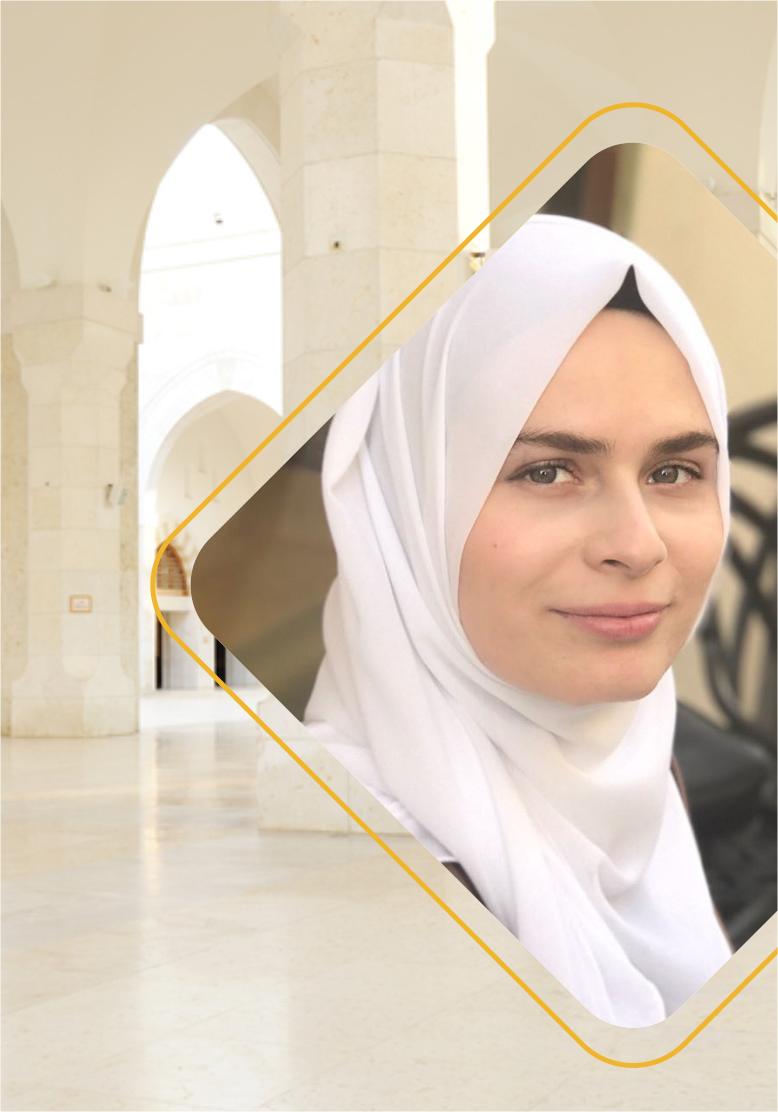
My name is Soumaya and I live in London, UK, with my husband and two young children. I studied Politics & History at SOAS University and graduated in 2012, before going on to achieve a Postgraduate Diploma reading Law. I believe it’s my interest in history that has fuelled my desire to travel and learn more about our world, ultimately resulting in the foundation of Halal Travel Guide.
Professional Introduction:
Soumaya T. Hamdi is the Founder and Managing Director of Halal Travel Guide, the travel company offering bespoke trips designed for adventure-seeking Muslims. She has been described as the “entrepreneur redefining travel for millennial Muslims” and listed in the top 20 influential women in the travel industry. Halal Travel Guide works in partnership with local hosts from around the world, with a key focus on responsible tourism that benefits both travellers and the destination.
Halal Travel Guide stands apart from other travel companies by working in partnership with local hosts from around the world to create immersive and authentic travel experiences. They offer an array of adventures, from traditional cookery classes in the Balkan countryside to bedouin stargazing in Wadi Rum and exploring the Golden Age of Islam in Uzbekistan. Every Halal Travel Guide trip is carefully curated to provide travellers with the most enriching and unforgettable experience possible.
One of the core values that Soumaya has instilled in Halal Travel Guide is a commitment to responsible tourism. Soumaya firmly believes that travel should not only be enriching for the traveller but also for the destination. By working with local hosts and promoting responsible tourism practices, Halal Travel Guide ensures that the communities they visit are respected and supported in a sustainable way.
With Soumaya at the helm, Halal Travel Guide is set to continue its mission to redefine travel for Muslims around the world. Her vision and dedication have created a company that not only provides unforgettable travel experiences but also makes a positive impact on the communities they visit.
Interview Questions:
What inspired you to start your business in the Islamic Economy?
For as long as I can remember, I’ve loved the idea of travelling the world. Who doesn’t?
I’d spend hours flicking through my History of the World Book learning about the Ancient Egyptians and their pyramids, the stories of the Tsars in Russia, and exploring the world through travel and nature shows.
Growing up though, the only destination we’d travel to as a family abroad was North Africa, mainly a) to visit family and b) because it was easy being a Muslim traveller there. Most of the time though, we’d ‘staycation’ in the UK. Speaking with other young Muslims, I’ve found that a lot of us can relate to the experience of taking home-cooked meals to the beach and wearing makeshift modest swimwear because we knew we wouldn’t find halal food nearby, and burkinis were only – mercifully – invented once we got older.
Beyond North Africa, I didn’t really travel abroad much before the age of 23. I didn’t take a Gap Year and travel through Europe like many people my age, or spend summers volunteering abroad.
So, when I had the chance to travel through Singapore, Malaysia, South Korea and Japan in the summer of 2015, I jumped on the opportunity. I loved every minute of the adventure, navigating my way with my husband and 5-month-old baby in a small rental car.
The thing is, as someone without friends or family in Malaysia, I found it a little harder than I thought it would be to find online recommendations for halal food – the places the locals would recommend – so we made a few mistakes along the way that could have been avoided. Malaysia is easily one of my favourite countries and one I had been planning to visit for years, but I felt like trip planning was harder than it needed to be. In Seoul, I was surprised that despite my outward appearance, I didn’t receive unkind stares or the cold shoulder – in fact it was the complete opposite. The locals were curious about my hijab but in a friendly way, and I lost count of the amount of times complete strangers would offer their help, smile, or even strike up casual conversation.
I realised that there are a lot of barriers that get in the way of Muslims enjoying much better travel experiences, and I started to wonder,
- How might we change the way we travel so that it benefits not just the traveller but the local community/destination as well?
- How might we empower young Muslims to feel confident in their Islamic identity through travel?
- How might we bridge the disconnect between like-hearted people from around the world using both digital and real-life solutions?
I couldn’t find a travel company that gave the solutions to these problems, so I decided to try and find these solutions myself and that’s the story of how Halal Travel Guide was born.
What were the challenges you had to overcome in the initial stages of starting your business?
The biggest challenge was feeling like I lacked the relevant experience and expertise to build a successful initiative. I didn’t have a background in tourism, nor did I have much practical business experience. However, my drive to provide a unique travel experience that caters to the needs of modern Muslim travellers and is aligned with Islamic values has kept me going. I did a lot of field research, travelling to destinations before advertising them, checking out local services, hotels, restaurants and meeting with local Muslims. They say that the best way to learn is on the job, and this approach has really helped me to develop a practical, holistic understanding of the Muslim travel market that is otherwise hard to get from research papers or online surveys. That said, I also turned to freely available online courses and resources to gain knowledge and skills. Although the process was difficult, it allowed me to acquire the necessary skills and knowledge to build Halal Travel Guide into a successful business, Alhamdulillah.
If you ever find yourself in a similar situation, don’t give up! Particularly as women, we sometimes have the tendency to talk ourselves out of doing something that’s a little ‘risky’ – i.e. starting a business. If you are passionate and good at something, AND you have found there is a need for it in the market, PLUS you have figured out a way to make a living from it, then stick with it! You have found your ‘ikigai’! It will require a lot of investment from you, but insha Allah it will be worth it. Keep learning, keep praying and keep trying.
| It’s important to start with purifying one’s intention – even if you don’t yet have a clear vision – and trust that Allah will guide you in every aspect of your goals and dreams. |
What is the most important thing you feel anyone needs to do to build a successful business in the Islamic Economy?
Firstly, it’s important to start with purifying one’s intention – even if you don’t yet have a clear vision – and trust that Allah will guide you in every aspect of your goals and dreams. As we know, our beloved Prophet (peace be upon him) advised us that “Actions are but by the intention and every man will have but that which he intended”, so this, I believe, is the foundation stone for anything we want to do successfully in life. To be honest, I’ve found that it’s helpful to go back and refresh your intention regularly, to keep things in perspective and ensure you’re staying on the right track.
The next most important thing anyone needs to do to build a successful initiative/organisation in the Halal/Islamic Economy is to have a clear understanding of the community’s needs and values. One should also have a deep appreciation for the diversity and complexity of the Muslim market and be willing to work with local hosts and communities to create authentic and immersive travel experiences.
What were the most important learning experiences you would like to share?
One of the most important learning experiences I’ve had is the importance of building high-quality, long-term relationships with local hosts and communities. This is crucial for creating authentic and culturally appropriate travel experiences that benefit both travellers and the destination. It also helps to ensure that we can assess the impact our trips have on the destination, to make sure that this is something that is not causing harm. For this it is necessary to be adaptable and flexible, as every destination and community has its own unique needs and circumstances.
| Tourism is unique in that it has the potential to contribute to most – if not all – of the 17 Sustainable Development Goals. When planned and executed responsibly, tourism provides jobs to some of the most vulnerable members of society. |
Because I initially didn’t have much travel experience, this is something that I have learnt and appreciate more now than I did seven or eight years ago. Tourism is unique in that it has the potential to contribute to most – if not all – of the 17 Sustainable Development Goals. When planned and executed responsibly, tourism provides jobs to some of the most vulnerable members of society. It preserves cultural heritage and natural habitats; provides decent work and the chance for economic growth and can foster peace and harmony between diverse groups. Unfortunately, the reality is that the growth of travel and tourism over the last six decades or so has caused more harm than good. Over-tourism, underpaid workers and food waste are just some of the ways this happens.
That’s why we used our years of qualitative and quantitative research at Halal Travel Guide to create a new framework for developing tourism products. This framework can be used by stakeholders and decision-makers across the industry, including tourism boards, destination marketing organisations and tour developers. The model highlights 4 key elements of (1) Faith, (2) Community, (3) Sustainability and (4) Digital, as essential features of sustainable growth in the Halal Travel Market. We designed this framework with the largest growing segment of the halal travel market in mind – Millennials and Generation Z – providing a long-term, sustainable approach to developing new Halal Tourism products and services that will appeal to a key segment of this market.
What advice would you give aspiring leaders in the Islamic Economy?
To those aspiring to be leaders in the Halal/Islamic Economy, I advise that you remain committed to your values and purpose, while also having a deep understanding of the community you aim to serve. It is important to be passionate, innovative, and willing to take risks. In addition, humility and a willingness to learn from others, especially from local communities and hosts, can go a long way in building a successful initiative or organization.