
Country: Argentina
Organisation Name: The Halal Catering Argentina HCB
Started in the Year: 2002
Position: Co- Director and Advisor on Halal Certification & Procedures
Website: www.thehalalcateringargentina.com
Personal Introduction:
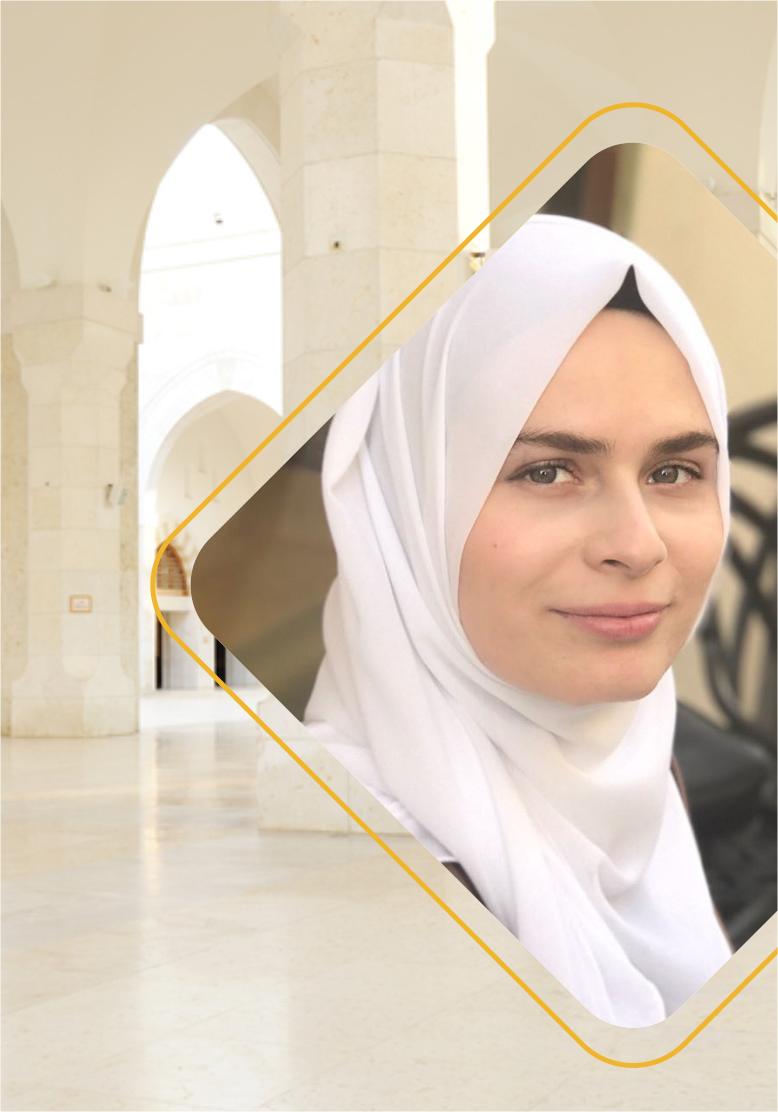
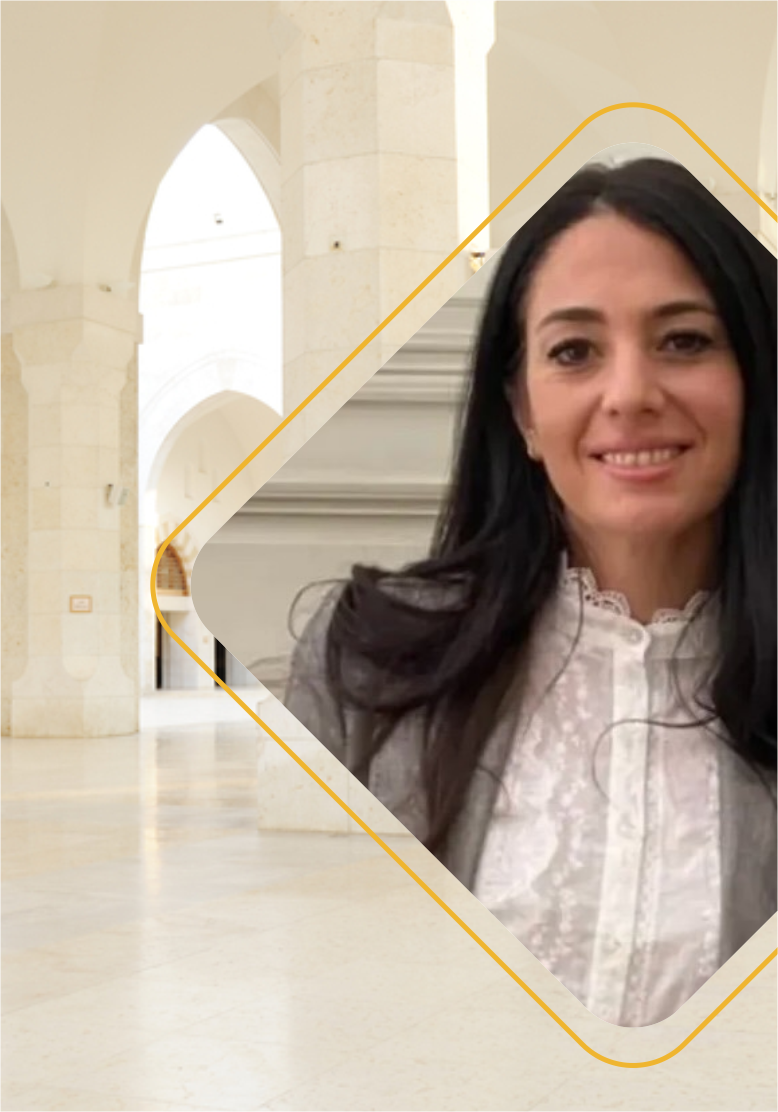
Nadima Silvia A. Khalil is Argentinean and a Muslimah.
Professional Introduction:
Advisor on Halal procedures and rules. Halal Lead Auditor. Trainer on Halal procedures for airline catering services, hotels and restaurants and general Halal procedures for Producer and Slaughtering houses plants. Other roles in THCA: Member of Halal Certification Decision Committee, developing of Standards of Halal Procedures, audits and Halal supervision of non-meat products.
Interview Questions:
What inspired you to start your career in the Halal industry?
Convinced to continue with the family business, but more than thinking about a business to continue, the challenge for me was the values of my family and the traditions regarding food. Halal was always part of our diet, it was part of our identity, living in a non-Muslim country, we have had it since childhood and in all areas in which we do not relate, explain what we can eat and what not, look for food according to us. I think many of us were Halal auditors without actually being Halal, trying to look up products in supermarkets, calling companies and asking about a questionable ingredients. I belong to a family whose community, when they arrived in Argentina, needed to go out and find a place to slaughter a cow or a lamb because they wanted to eat Halal food. That community’s need also indirectly led to the birth of slaughterhouses or slaughter experts. Who were in search of Halal food. That is why my grandfather Don Kabalan Khalil, was little by little putting together a team of Muslim workers and supervisors to later form the Halal certifier.
What were the challenges you had to overcome in the initial stages of starting your career?
I was very young when I decided to accompany my father, Gustavo Ernesto Khalil, in THCA. One of the biggest challenges was that at that time I did not have formal academic training in Halal matters. However, I had gained a great deal of knowledge by listening to my father during forums, international trips, and Halal audits, and by reading all the materials he brought back from Halal world conferences. I was very eager to develop myself in an area that I knew would be challenging.
Soon, I found myself participating in my first Halal training sessions, accompanying my father in certification seminars where we explained the importance of religious mandates in food consumption. Those early experiences helped shape my professional path.
At that time, the Argentine food industry mainly certified meat products, so I had to work closely with the meat-packing industry, which was almost entirely managed by men. Being young, female, and Muslim in a non-Muslim country, and trying to establish my place in Halal certification, was certainly challenging.
| Even religious people like the MUFTIS congratulated my father for encouraging his female daughters or his daughter in this case me to continue with Halal work. |
In this process, I was also supported in the meat industry by my brother, Ismael Omar Khalil, Co- Director and Halal Leader auditor in THCA, who had previously worked alongside our father and guided me in understanding the slaughteringhouses sectors, slaughter practices, and the operational realities of meat processing plants. His experience was essential in helping me navigate this environment.
At the same time, I knew that there were pioneering women in Halal certification, such as Dr. Aisha Grindra, the first president of the WHC Halal Council and director of MUI (Allah yerhamha), and Dr. Mariam Abdul Latif from Malaysia. Since we had constant communication, they became important references and mentors for consultation.
During my first trips to Halal forums and accreditation entities, I initially thought that women’s participation in this field might not be well received. However, contrary to many Western prejudices, I was always welcomed and respected. Even religious authorities, including Muftis, congratulated my father for encouraging his daughter to continue working in Halal certification.
Another challenge was convincing non-meat food industries to see the Muslim market as an opportunity. After participating in Halal fairs, companies began requesting certifications for products such as soy lecithin and powdered milk. The Argentine industry gradually understood that this was achievable through proper training and by sourcing raw materials compliant with Halal requirements such as HAS system.
This led me to start training quality managers, plant managers, foreign trade managers, and other professionals involved in food exports. Thank God, I have since trained more than 500 companies, as well as ministries and government institutions, with the purpose of raising awareness about the importance of Halal and Tayyib food for the Muslim community around the world.
What were the most important learning experiences you would like to share?
For my personal experience as a Halal auditor, the most relevant thing was to have put myself in the shoes of the different operators or functions that are carried out in a plant, to learn from the food or product factory how it was produced, what were its critical points of control. having gone to witness tasks and put myself in the place of the slaughterer and understand their needs from the human point of view, from their practice, from the Halal to know what to demand of the plants later long before ISO standards are installed, for example in the Halal certification, and that is given by practice having participated in Halal forums and having visited the supermarkets of each country to learn about the idiosyncrasies of the Muslim who lives in a Muslim country and what he looks for when buying products from a non-Muslim country.
What advice would you give aspiring leaders in the Islamic Economy?
Do not be afraid of challenges even if the country where you have to develop Halal certification is not Muslim, even if the industry to be certified is still difficult, you can always find a way to reach them, not just the industry but also to all those who are part of the trade, whether external or internal, I always base our experience on export products because Argentina does not have a local market, so we have opted to train government entities, chambers of commerce, product promotion agencies, international event organizers, and of course plant managers. and all of our presentations started with a cultural, religious introduction, we started with HALAL WHY, FOR WHOM AND FOR WHAT bringing them closer to our religion by providing different information to what is read in the media, makes them closer to Halal, It makes them experience Halal and want to commit to the challenge of being certified and a message for Halal consumers and the accreditation bodies of each country or Halal market, is that they are always in communication with the certificates of origin of the product. Because each market and each country is different, each certification body seeks a way for this product to arrive with the maximum Halal guarantee for the Muslim who is on the other side of the world.