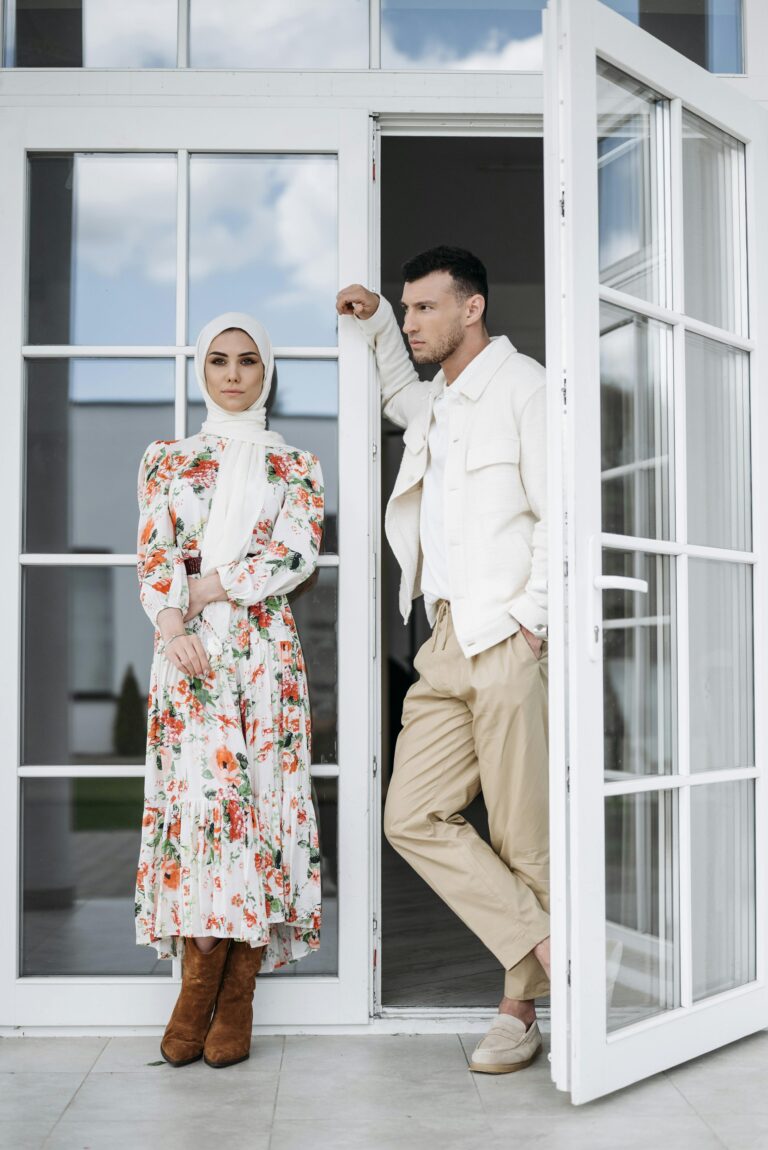


Modest fashion has evolved from a misunderstood niche into a global cultural and economic movement. Far from being about limitation or uniformity, modest fashion represents intentional self-expression—a way of dressing that reflects dignity, values, creativity, and cultural confidence.
In a world shaped by fast fashion, hyper-visual culture, and ever-changing trends, modest fashion offers an alternative narrative: style with purpose, beauty with boundaries, and identity with integrity.
At Islamic Economy Academy, modest fashion is understood not merely as apparel, but as a values-driven lifestyle choice and a rapidly growing pillar of the halal and ethical economy.
What Is Modest Fashion?
Modest fashion refers to clothing choices that prioritize:
- Coverage and dignity
- Comfort and functionality
- Cultural and faith alignment
- Ethical presentation of the self
While modest fashion is deeply rooted in Islamic values, it is not exclusive to Muslims. Women and men across cultures and faiths are embracing modest fashion as a conscious response to:
- Over-sexualization in media
- Body commodification
- Unsustainable fashion practices
- Loss of personal and cultural identity
Modesty, in this context, is not about hiding—it is about intentional presence.
Modesty as Empowerment, Not Restriction
One of the greatest misconceptions about modest fashion is that it limits self-expression. In reality, modest fashion:
- Shifts focus from the body to the individual
- Prioritizes character over display
- Enables confidence without conformity
By choosing how and why they dress, modest fashion wearers reclaim agency over their image—free from external pressure to conform to unrealistic or exploitative beauty standards.
Modesty becomes a form of empowerment, not erasure.
The Aesthetic Language of Modest Fashion
Modest fashion is rich in creativity and diversity. It embraces:
- Layering and silhouettes
- Texture, fabric quality, and craftsmanship
- Cultural motifs and heritage designs
- Contemporary tailoring and innovation
From flowing abayas and structured coats to modern dresses, tunics, and coordinated sets, modest fashion proves that coverage and creativity are not opposites.
Designers around the world are redefining elegance—without compromising values.
Modest Fashion and Cultural Identity
Modest fashion allows individuals and communities to:
- Preserve cultural heritage
- Express faith with confidence
- Blend tradition with modernity
It reflects the diversity of Muslim cultures—from Southeast Asia and the Middle East to Africa, Europe, and the Americas—while remaining adaptable to local aesthetics and climates.
In this way, modest fashion becomes a living cultural expression, not a static uniform.
Ethics and Sustainability in Modest Fashion
Modest fashion naturally aligns with the principles of ethical and sustainable consumption.
It often emphasizes:
- Quality over quantity
- Timeless design over fast trends
- Responsible sourcing
- Fair labor practices
As consumers become more conscious, modest fashion brands are increasingly leading conversations around:
- Sustainable textiles
- Slow fashion models
- Circular fashion and reduced waste
Values-driven fashion resists disposability.
The Global Modest Fashion Economy
Modest fashion is now a multi-billion-dollar global industry, influencing:
- Retail and e-commerce
- Fashion weeks and runways
- Digital influencers and content creators
- Textile innovation and design education
Entrepreneurs, designers, and startups are building brands that serve:
- Muslim consumers
- Faith-conscious professionals
- Ethics-driven global audiences
This growth demonstrates that values-based markets are commercially viable and culturally influential.
Digital Media and the Rise of Modest Fashion Voices
Social media and digital platforms have transformed modest fashion:
- Amplifying diverse voices
- Challenging stereotypes
- Building global communities
Content creators and designers use digital spaces to:
- Share styling inspiration
- Educate about modesty and identity
- Promote ethical fashion choices
Representation matters—and modest fashion has created its own powerful narratives.
Challenges Facing the Modest Fashion Movement
Despite its growth, modest fashion faces challenges:
- Tokenism and superficial inclusion
- Mass-market dilution of values
- Exploitative production practices
- Cultural misrepresentation
Sustaining the integrity of modest fashion requires:
- Ethical leadership
- Consumer awareness
- Support for authentic brands
- Education and industry standards
Growth must not come at the expense of principles.
Education and the Future of Modest Fashion
The future of modest fashion depends on:
- Design education rooted in values
- Innovation in sustainable materials
- Business models aligned with ethics
- Cultural literacy and sensitivity
Institutions like Islamic Economy Academy play an important role in:
- Elevating discourse
- Supporting ethical fashion entrepreneurship
- Connecting creativity with conscience
Conclusion: Modest Fashion as a Statement of Values
Modest fashion is more than a trend—it is a statement of identity, ethics, and intentional living.
It challenges dominant fashion narratives by proving that:
- Style does not require exposure
- Beauty does not require objectification
- Success does not require abandoning values
When fashion is guided by dignity,
creativity becomes purposeful,
identity becomes confident,
and style becomes a form of self-respect.
At Islamic Economy Academy, we see modest fashion as a vital expression of the halal lifestyle and ethical economy—one that empowers individuals, supports ethical industries, and reshapes global fashion with integrity.
Explore more insights on modest fashion, ethical creativity, and values-driven industries at Islamic Economy Academy.