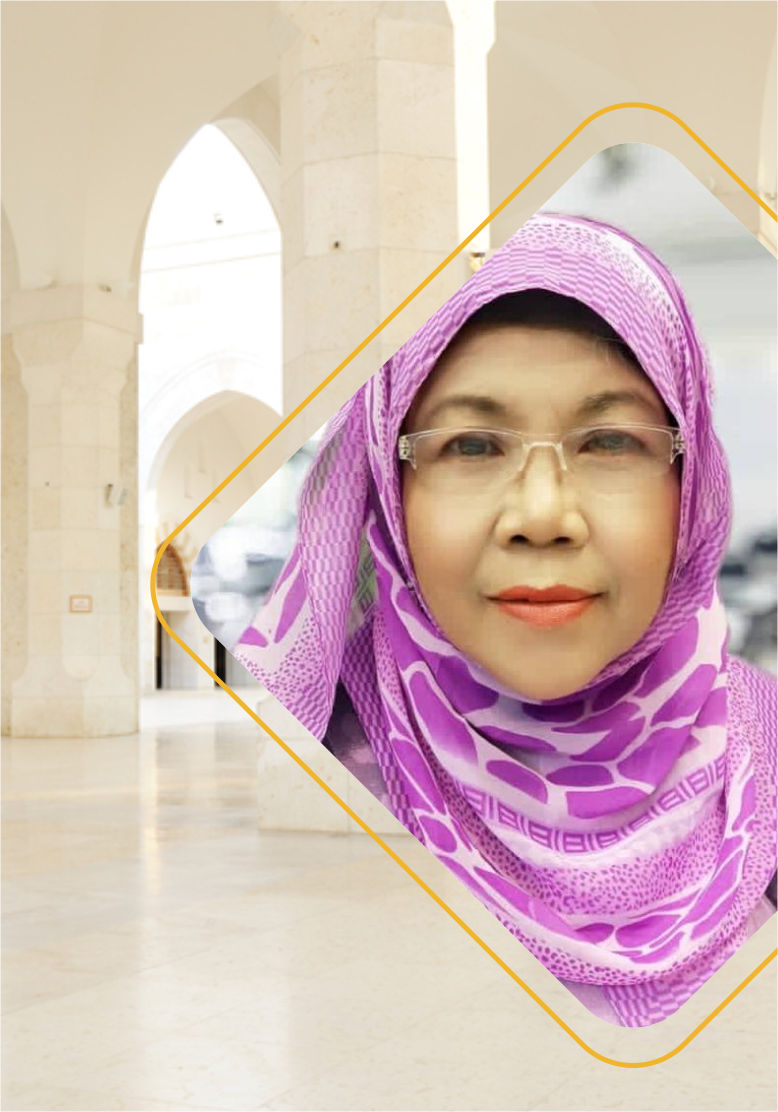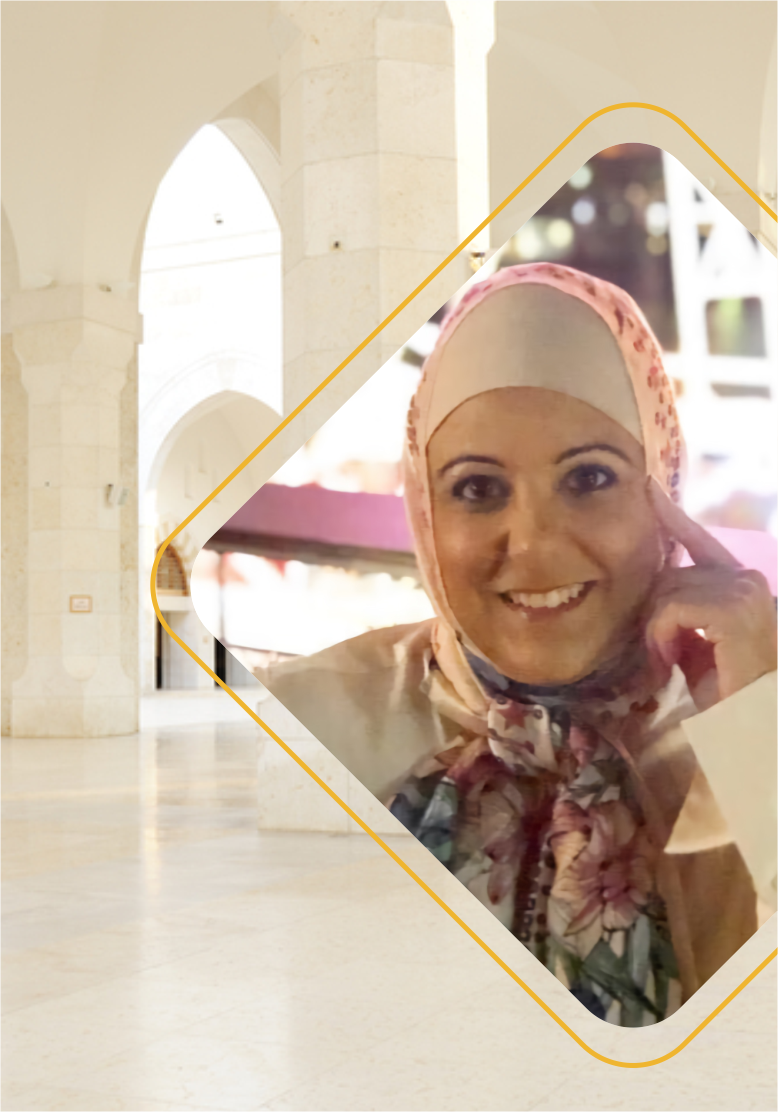

Country: The Netherlands
Organisation Name: Dietist Mariam/
Voorlichtingsbureauhalalvoeding
Started in the Year: 2013
Position: Founder
Website: www.ikeethalal.nl
Personal Introduction:
| Never underestimate your efforts, even if it sometimes seems like a small thing! |
As a Muslim dietician, graduated in 2000 from the University of Applied Science-Food management and Research, I was very interested in food from Islamic perspective and the Halal market. There was not much information accessible in the Netherlands and in the Dutch language. This is the reason why I started to do my own research in 2008 by meeting different Halal certifiers and collecting questions from the internet and answering them. I started my own website which contained a mixture of regular diet advise and Halal food advise. This gave me new opportunities. I first got introduced into the halal business when I was invited to recruit businesses for the the first Halal expo event in the Netherlands.
My website www.ikeethalal.nl (means I eat Halal) has grown quite a bit and got a lot of followers on Facebook. There are various subtopics on the site like Halal nutrition and the focus on the needs of the consumer including dietary advice, diversity of Halal products and Halal legislation on Halal food which beyond just one Halal certificate is being looked at by creating awareness. Also, I tried to show the positivity of the term Halal food because in Europe there was growing a movement against Halal and specifically the non-stun slaughter method of slaughter.
In 2013 my passion became true; I officially started my own company VoorlichtingsbureauHalalvoeding (=Information Office Halal food) and offered consultancy, workshops, presentations and diet advice which aims for a socially committed and healthy society. Education and awareness is what I began doing by giving presentations about Halal. Also my network had been growing after I had my exhibition stand at the first Halal expo in the Netherlands. My network was expanding worldwide and I got the possibility to learn and discover a lot from scientific and Islamic point of view about Halal food.
Professional Introduction:
Information Office Halal Food is an information office targeting the consumer in the food market, being specialized in diet, Halal food and healthy lifestyle. We respond to the latest developments and needs of the multicultural society to continue Halal food development and innovation, healthcare and diet advice.
We offer diet advice and inform consumers about Halal in media, Halal products, health & lifestyle. Information Office Halal Food aims to serve consumers and companies and provide insight into the quality of Halal food in the Netherlands and thus behavioural change to sustainable, healthy and safe Halal nutrition which leads to more awareness in making their food choices. Besides representing consumers we are a reliable and professional partner of employers and educational institutions in the Netherlands and abroad. We build bridges between cultures within the healthcare and Halal food industry.
Transparency, consumer confidence, innovation and social commitment are our key elements in trying to realize the 6 H’s:
- Halal Awareness and Education
- Halal Research
- Halal Promotion
- Halal Diet
- Halal Consultancy
- Halal Media
Interview Questions:
What inspired you to start your initiative in the Halal industry?
During my whole study Food management and Research the concept of ‘Halal food’ was a big question. This concept is still a vague and unknown concept among the Dutch population. What is Halal? What is Haram? How is it used in practice and what are the obstacles. I got the passion to find out more about this through my experience in a nursing home and psychiatric institution. As a dietitian, I prescribed “Muslim meals”, which later turned out to just be “pork-free . The kitchen had no idea what halal actually meant.
| The leader of the people is their servant. |
As a practising Muslim woman, this angered me, knowing that Halal entails much more than just ‘pork-free’ food. This got me thinking and gave me the idea to approach different Halal certification agencies to get more clarification. In 2006 I did my own research via the internet and found that the information about Halal food is very underexposed in the Netherlands. As a result, misuse of the term Halal is permitted and false Halal is not punishable because Halal does not have a national quality mark. Many people fall victim to this, in particular the consumer, who cannot independently trace the origin of their food. I collected many consumers’ questions on social media and tried to answer them online and created awareness about healthy and Halal food. In addition I built up an international network of experts Alhamdolilah.
What were the challenges you had to overcome in the initial stages of starting your initiative?
The challenges I mainly had were the tough competition that certifiers had among themselves, which was partly because they often have different opinions on the concept of Halal food and how to certify and rate the audit. I had also noticed fraud at times, but the biggest challenge was when the Party of the Animals in my country wanted to ban us from Halal animal slaughter without stunning. As a result, I went from a dietician in health care to a Halal consultant within the Halal business and in Islam from a fiqh perspective, I also started to specialize in the political market. These challenges challenged me to take a helicopter view and to strive for unity and clarity around Halal food positions.
What is the most important thing you feel anyone needs to do to build a successful career in the Islamic Economy?
| Trust always Allah and be yourself, do research and inquire about the business person before you do business with the person orf the company or organisation. SalatIstighara is also recommended by Islam. |
My advice is to trust yourself and Allah always do research and inquire before you do business with anyone. Salah Istighara is also recommended by Islam. Do what gives you energy and where your interests lie to further develop your hidden talents.
What were the most important learning experiences you would like to share?
Knowledge among which human knowledge and Halal food knowledge are the keywords. Build trust with the people around you while paying attention to how someone reacts to money, fame, etc. when people only focus on money they can change and lose sight of the true halal target they first had and use you for their own sake instead of supporting each other as colleges in the halal market.
What advice would you give aspiring leaders in the Islamic Economy? The Prophet (saw) highlighted the desire for leadership as directly linked to losing the help and assistance of Allah, “Do not ask for authority. If it is given to you at your request, you will be held fully responsible for it. If it is given to you without your request, you will be helped by Allah in it.” (Bukhari and Muslim). In other words it takes great responsibility. Work hard for years until you get promoted to a leadership role. If you are a top performer, you may feel that you need to be given a certain level of leadership to validate it. The Prophet (saw) said explicitly that “The leader of a people is in their service.” When this is taken in context with his (saw) description of leadership as an Amanah -a trust-, it becomes clear that this is the only way we can view leadership. This idea is further reinforced in the famous hadith that “All of you are shepherds and each of you is responsible for his flock. The leader of people is a guardian and is responsible for his subjects.”