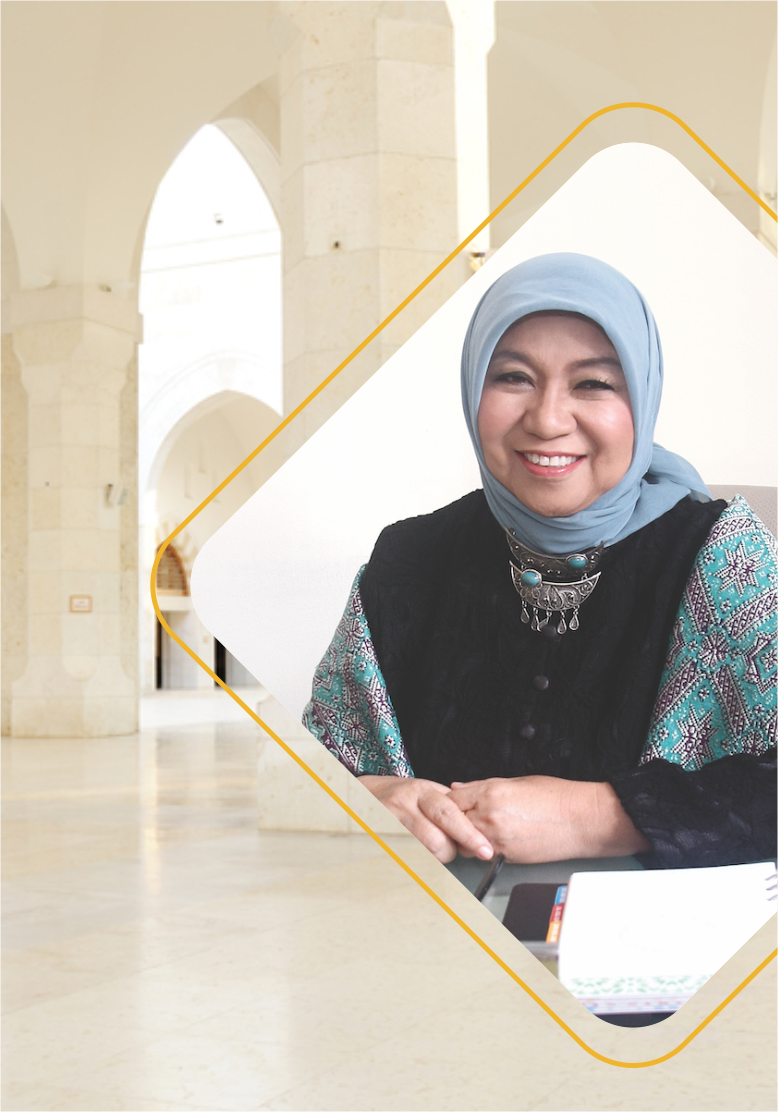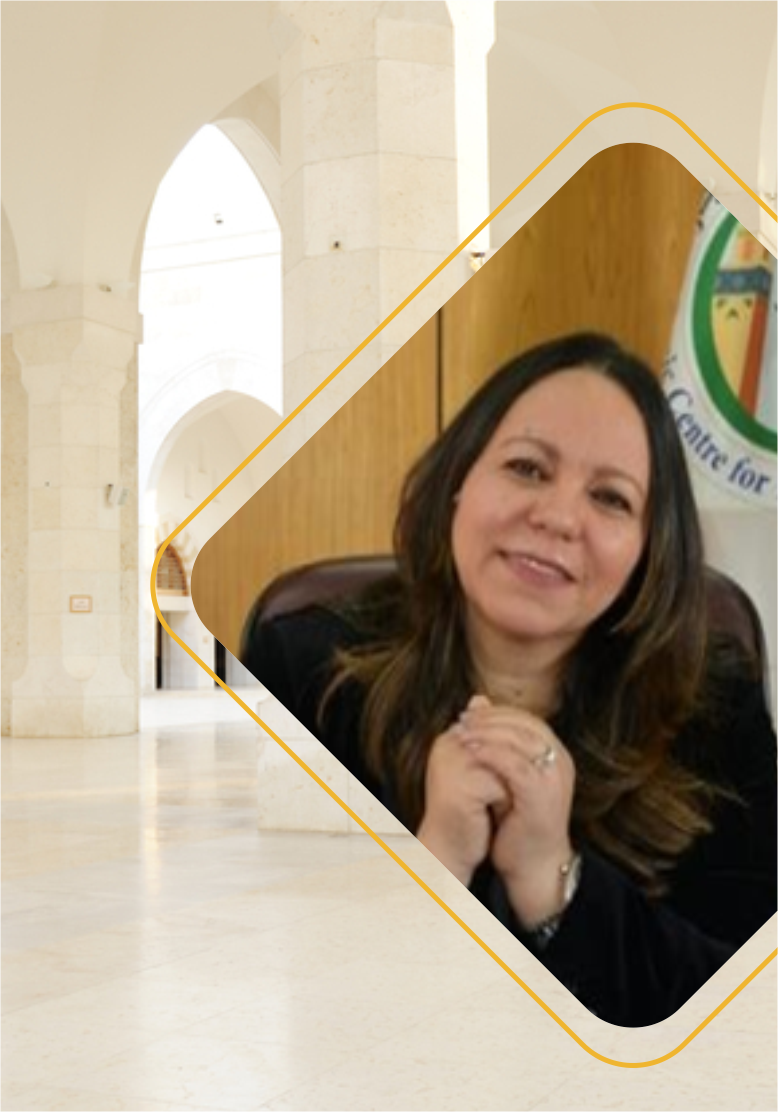
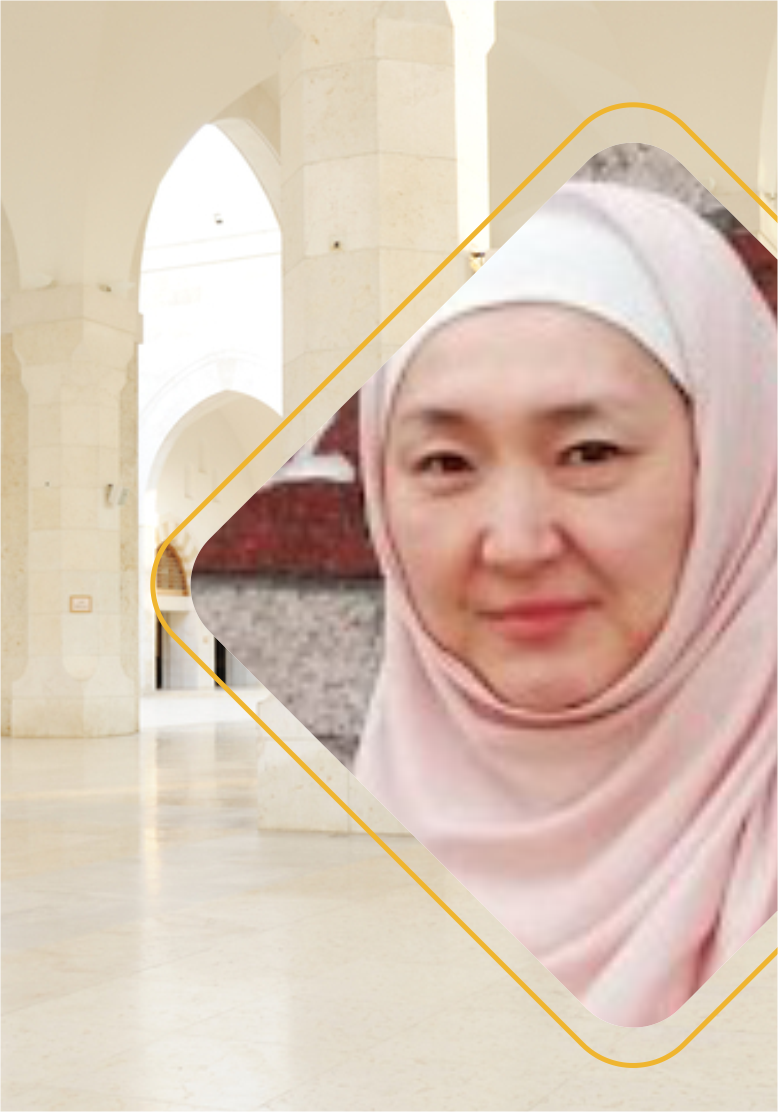

Country: Japan
Organisation Name: NPO Japan Halal Association
Started in the Year: 2010
Position: Chairperson, Representative of Malaysian R/O
Website: www.jhalal.com
Personal Introduction:
I was brought up in a Buddhist family and left home at the age of 16 to study in New Zealand and later in England. As a young girl living alone in foreign countries and trying to find stability, the Qur’an became a source of comfort for my heart, and I reverted to Islam in 2005.
I am now a mother of three children and hope to provide a better environment for them to live with Islamic values, which led me to move to Malaysia.
Professional Introduction:
I previously ran a successful business in event management and tourism in Dubai after working for several years in Malaysia as an expatriate for a Japanese company. In 2010, I founded the NPO Japan Halal Association and have served as its Chairperson until today. In 2024, we opened our Malaysia Representative Office, which I currently represent.
Interview Questions:
What inspired you to start your initiative in the Halal industry?
I lived in Malaysia and Dubai for a total of 10 years as a Muslim revert. When I returned to Japan, I struggled as a Muslim living in a non-Muslim family and environment. In particular, obtaining halal meat and finding spaces for prayer when going out were major challenges.
I thought to myself, if these facilities do not exist, then we should create them. A few years later, there was a growing trend in the industry seeking halal certification, and opportunities such as the Olympic Games emerged. We simply went with the flow. It was like a kamikaze moment for the halal industry in Japan.
What were the challenges you had to overcome in the initial stages of starting your organisation?
We started as a non-profit organisation, providing lectures on halal and halal management systems, Muslim hospitality, and halal certification. One major challenge was that, at one point in Japan, many organisations began offering halal certification one after another. Different halal certification bodies required different standards, which created confusion among industries and government authorities. We addressed this by providing clear explanations through our training programs and seminars.
Another difficulty was finding the right personnel, such as Sharia auditors with experience in halal certification and technically qualified Muslim auditors in relevant fields. The quality of halal certification depends greatly on these professionals, so building a strong team of auditors requires significant effort.
What is the most important thing you feel anyone needs to do to build a successful career in the Islamic Economy?
| We must always aim to be the best and ahead of others in what we do. First, we have to focus on the quality of the work, sincerity to our Deen and the society. Allah loves those who are useful to others. |
In a non-Muslim country like Japan, unlike in Muslim-majority countries, the Islamic economy must benefit both non-Muslims and Muslims in order to be sustainable. It cannot be one-sided. We act as intermediaries who must maintain balance between both parties.
We must always aim to be the best and stay ahead in what we do. First, we must focus on the quality of our work and maintain sincerity toward our Deen and society. Allah loves those who are beneficial to others, so we should never hesitate to serve. Second, we must motivate ourselves to achieve our goals. Third, we should regularly review our progress and set new goals after achieving existing ones.
What were the most important learning experiences you would like to share?
The halal industry is not only about the economy; it is about building a sustainable future in Japan, where Muslims live as a minority and coexist with non-Muslims. Therefore, the adab (good character and behavior) of Muslims is essential for maintaining balance in society. Islam teaches these principles, and we simply follow its guidance.
Most players in the halal industry are non-Muslims — even in Malaysia, about 90% are non-Muslim, and in Japan it is nearly 100%. Our certified companies are multinational corporations that generate significant profits through halal certification, but the benefits returned to the Muslim community remain indirect and limited. This imbalance could be addressed by establishing a waqf system within every part of the halal ecosystem.
For example, halal certification bodies could contribute part or all of their profits to a waqf fund, not individually but collectively among certification bodies within a country. The same model could apply to PR agencies, training institutes, R&D institutions, publishers, distributors, and halal retail businesses. These benefits could directly support Muslim communities by developing infrastructure such as halal slaughterhouses, distribution systems, retail outlets, schools, and mosques.
This is my goal in the halal industry, and I intend to continue working toward it.
What advice would you give aspiring leaders in the Islamic Economy?
| We must have good benefit through the Islamic economy to both non-Muslims and Muslims to be able to sustain the industry. |
Islam is the source of inspiration, and it is perfect. Always seek guidance from it. This may sound abstract to some, but when you examine your work closely, the guidance becomes clear. I know only a little about Islam, but I know that what truly makes me happy is when my heart is filled with love for Allah. This is the secret to success.
We live in a world filled with conflict, frustration, and injustice. This is not a time to think only about ourselves but to act as a community. It is not a time for competition or conflict among ourselves. We must join hands with friends, neighbors, and even those we once disagreed with, to overcome challenges and achieve our goals together.
The halal industry and economy are still in their early stages, especially in non-Muslim countries. Halal certification itself is still evolving, and many areas require development, improvement, organization, and restructuring. Governments and non-governmental organisations must work together to fulfill the responsibility that Allah has entrusted to us. We must strive to fulfill this duty to the best of our ability. Although it is difficult, with the grace of Allah, I believe we can achieve this goal by being grateful for the responsibility, ability, and opportunity to fulfill our Deen.