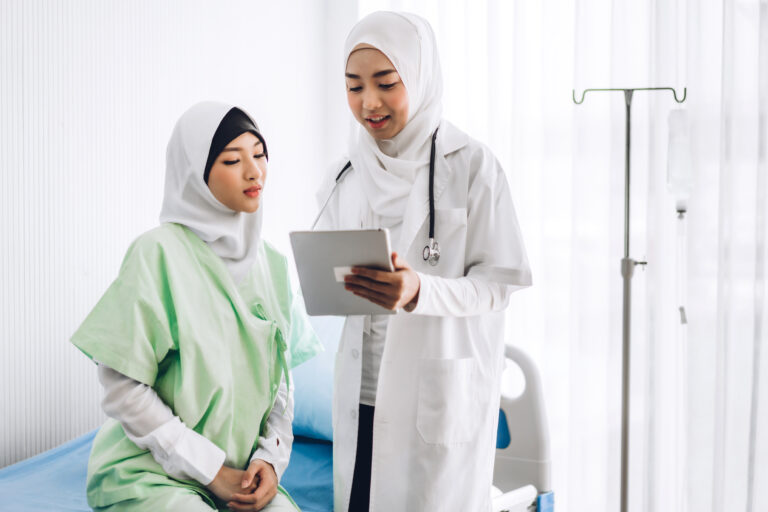

In a world where healthcare is increasingly commercialized, fragmented, and reactive, Halal Healthcare and Wellness offers a powerful alternative — one that restores ethics, balance, compassion, and purpose to the heart of healing.
Halal healthcare is not merely about permissible medicines or lawful ingredients. It is a comprehensive ethical and spiritual framework for caring for human life — one that aligns medical excellence with moral responsibility, spiritual wellbeing, and social justice.
At Islamic Economy Academy, we believe halal healthcare represents one of the most urgent and transformative frontiers of the global Islamic economy today.
Beyond “Halal Ingredients”: What Halal Healthcare Really Means
Too often, halal healthcare is reduced to checklists:
- Halal-certified pharmaceuticals
- Alcohol-free formulations
- Animal-derived ingredient compliance
While these are important, they are only the surface.
True halal healthcare is guided by the Qur’anic principle of Halal and Tayyib — lawful and wholesome.
This means healthcare that is:
- Ethically grounded
- Clinically sound
- Spiritually conscious
- Socially responsible
- Human-centered
It asks deeper questions:
- Is the treatment beneficial or merely profitable?
- Is the patient treated with dignity, compassion, and informed consent?
- Are vulnerable populations protected or exploited?
- Does the system promote prevention, balance, and long-term wellbeing?
The Foundational Principles of Halal Healthcare
1. Healthcare as an Amānah (Trust)
In Islam, life and health are sacred trusts from Allah (swt). Healthcare professionals are not mere service providers — they are guardians of human dignity.
This principle demands:
- Honesty in diagnosis and treatment
- Avoidance of unnecessary procedures
- Transparency in costs and outcomes
- Accountability to God, society, and conscience
2. Holistic View of the Human Being
Islam does not separate body, mind, and soul.
Halal wellness recognizes that:
- Physical illness can be linked to emotional and spiritual imbalance
- Mental health is as real and deserving of care as physical health
- Spiritual practices can support healing, resilience, and recovery
This is why halal healthcare naturally integrates:
- Nutrition and lifestyle medicine
- Mental and emotional wellbeing
- Spiritual care and meaning-centered healing
3. Prevention Over Intervention
Prophetic guidance emphasizes moderation, balance, and prevention.
Halal wellness promotes:
- Healthy eating and mindful consumption
- Regular movement and physical activity
- Stress management and emotional regulation
- Sleep, routine, and rhythm
- Avoidance of excess, addiction, and harm
A halal healthcare system prioritizes keeping people well, not just treating them when they are sick.
Prophetic Medicine Meets Modern Science
Islamic medical heritage — often referred to as Tibb Nabawi (Prophetic Medicine) — offers timeless insights into health and healing.
These include:
- Nutritional wisdom (dates, honey, black seed)
- Lifestyle discipline and moderation
- Emotional and spiritual resilience
- Natural remedies and preventive practices
Halal healthcare does not reject modern medicine.
Instead, it calls for integration:
- Evidence-based medicine
- Ethical pharmaceutical use
- Traditional and complementary therapies
- Personalized, patient-centered care
The future of halal healthcare lies in integrative models that combine the best of both worlds — ancient wisdom and modern science.
Ethics at the Core: Halal Healthcare as Moral Medicine
Modern healthcare faces deep ethical challenges:
- Over-medicalization
- Conflicts of interest
- Profit-driven decision-making
- Inequitable access to care
- Exploitation of patients’ fear and vulnerability
Halal healthcare responds with a values-led framework:
- Justice (ʿAdl): Fair access regardless of wealth
- Compassion (Raḥmah): Care rooted in mercy
- Excellence (Iḥsān): Clinical and ethical excellence
- Accountability (Mas’ūliyyah): Responsibility before Allah and society
This makes halal healthcare not only relevant to Muslims, but universally appealing to all who seek ethical, humane medicine.
The Halal Wellness Economy: A Growing Global Opportunity
The halal healthcare and wellness sector is rapidly expanding across:
- Hospitals and clinics
- Pharmaceuticals and nutraceuticals
- Mental health and counseling services
- Preventive and lifestyle medicine
- Digital health and telemedicine
- Wellness retreats and rehabilitation centers
Muslim-majority and non-Muslim countries alike are recognizing the demand for:
- Ethical healthcare systems
- Culturally sensitive medical services
- Faith-conscious patient care
- Transparent, values-driven institutions
Halal healthcare is emerging as a bridge between faith, ethics, and innovation.
Why Halal Healthcare Matters Today More Than Ever
We live in an age of:
- Burnout and chronic disease
- Mental health crises
- Distrust in healthcare systems
- Rising costs and inequity
Halal healthcare offers a corrective lens — reminding humanity that:
Healing is not just a business. It is a moral responsibility.
It re-centers healthcare around human wellbeing, not corporate margins.
The Role of Education: Building the Next Generation of Ethical Healthcare Leaders
For halal healthcare to thrive, it needs:
- Trained professionals who understand both medicine and ethics
- Entrepreneurs who build mission-first healthcare institutions
- Policymakers who design values-based health systems
- Scholars and clinicians who collaborate across disciplines
This is where Islamic Economy Academy plays a vital role — nurturing knowledge, leadership, and practical frameworks for halal healthcare and wellness worldwide.
Conclusion: Toward a Healing-Centered Future
Halal Healthcare and Wellness is not a niche concept. It is a civilizational response to a world in need of healing — physically, emotionally, spiritually, and ethically.
By reclaiming healthcare as an amānah, integrating tradition with innovation, and placing compassion at the center, halal healthcare offers a model of medicine that heals the whole human being.
The future of healthcare is not just smarter or faster — it must be more ethical, more humane, and more holistic.
And that future, in many ways, is Halal.
For more insights on ethical economies, halal industries, and values-driven innovation, explore the knowledge resources at Islamic Economy Academy.