

Islamic education is not merely a system of instruction—it is a civilizational framework for nurturing faith, character, intellect, and responsibility. From the earliest days of Islam, education has been central to personal transformation and societal development. It aims to shape individuals who are spiritually grounded, intellectually capable, ethically upright, and socially responsible.
The foundations of Islamic education provide the philosophical, spiritual, and practical base upon which all curricula, institutions, and pedagogical approaches are built. Understanding these foundations is essential for educators, parents, policymakers, and institutions seeking to deliver authentic, relevant, and impactful Islamic education in today’s world.
At Islamic Economy Academy, Islamic education is viewed as the root system that nourishes ethical leadership, community development, and a values-driven economy.
The Purpose of Islamic Education
The primary purpose of Islamic education is not limited to information transfer or vocational preparation. Its ultimate aim is the development of a complete human being (insān kāmil) who lives in conscious submission to Allah (swt) while contributing positively to society.
Islamic education seeks to:
- Strengthen faith (īmān)
- Cultivate moral character (akhlaq)
- Develop intellect and critical thinking
- Enable responsible action (ʿamal ṣāliḥ)
- Prepare individuals for both worldly life and the Hereafter
Knowledge in Islam is meaningful only when it leads to wisdom, humility, and service.
Divine Revelation as the Primary Source of Knowledge
The foundation of Islamic education rests on revelation.
The Qur’an
The Qur’an is:
- The ultimate source of truth
- A guide for belief, conduct, and worldview
- A catalyst for reflection, reasoning, and ethical living
Islamic education nurtures a living relationship with the Qur’an—not only through memorization, but through understanding, contemplation (tadabbur), and application.
The Sunnah
The Sunnah of the Prophet ﷺ provides:
- Practical application of Qur’anic principles
- Pedagogical methods rooted in compassion, wisdom, and gradualism
- A model for ethical leadership, teaching, and mentorship
Together, the Qur’an and Sunnah form the epistemological core of Islamic education.
The Islamic Concept of Knowledge (ʿIlm)
In Islam, knowledge is:
- A trust (amānah)
- A form of worship
- A means to recognize truth and fulfill responsibility
Islamic education recognizes multiple sources of knowledge:
- Revelation (wahy)
- Reason (ʿaql)
- Experience and observation (tajribah)
These sources are not in conflict. Reason and experience operate within the moral and metaphysical framework of revelation, ensuring balance between faith and intellect.
Holistic Development: Body, Mind, and Soul
A defining foundation of Islamic education is its holistic nature.
Islamic education addresses:
- Spiritual development – faith, worship, God-consciousness (taqwā)
- Moral development – honesty, justice, humility, responsibility
- Intellectual development – reasoning, inquiry, reflection
- Physical and emotional wellbeing – balance, discipline, care
Education that ignores any of these dimensions produces imbalance. Islam seeks integration, not fragmentation.
Tarbiyah, Taʿlīm, and Taʾdīb: The Three Pillars
Islamic education is built on three interconnected concepts:
Tarbiyah (Nurturing and Growth)
Focuses on gradual development—spiritual, emotional, and intellectual—recognizing that growth requires patience and care.
Taʿlīm (Teaching and Knowledge Transmission)
Concerned with structured learning, understanding, and mastery of knowledge—religious and worldly.
Taʾdīb (Character Formation and Ethics)
Emphasizes manners, discipline, humility, and proper conduct. Knowledge without adab is considered incomplete.
Together, these pillars ensure education shapes who learners become, not just what they know.
Adab: The Moral Foundation of Learning
Adab governs:
- The relationship between student and teacher
- The intention behind seeking knowledge
- The application of knowledge in society
Islamic education places great emphasis on:
- Respect for teachers and scholars
- Humility in learning
- Responsibility in applying knowledge
Adab ensures knowledge becomes a source of guidance, not arrogance.
The Role of the Educator in Islamic Education
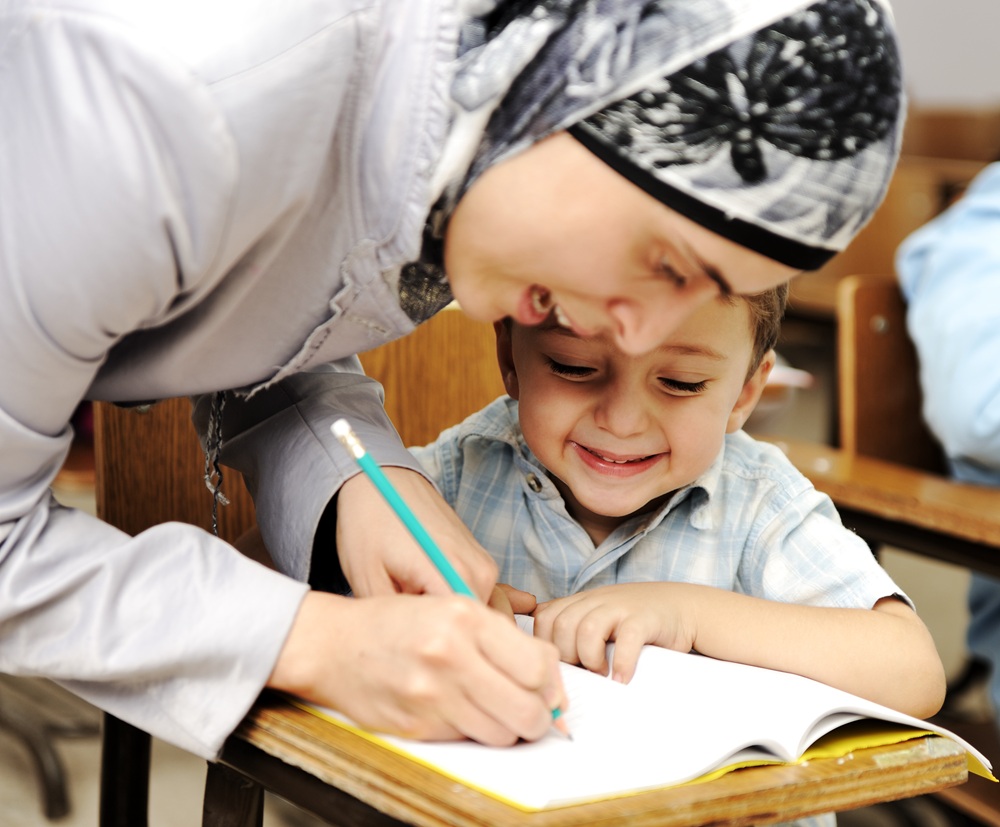
Teachers in Islamic education are not mere instructors—they are mentors, role models, and moral guides.
Their responsibilities include:
- Teaching with sincerity and compassion
- Modeling ethical behavior
- Encouraging reflection and critical thinking
- Guiding students toward wisdom and balance
The educator’s character often has greater impact than curriculum content.
The Learner’s Responsibility
Learners are expected to:
- Seek knowledge with sincere intention (niyyah)
- Exercise discipline and perseverance
- Respect teachers and peers
- Apply knowledge ethically
Learning in Islam is an active moral responsibility, not passive consumption.
Education for Society and Civilization
Islamic education is not individualistic—it is civilizational.
It prepares individuals to:
- Serve their families and communities
- Uphold justice and social responsibility
- Contribute ethically to economy, governance, and culture
- Act as stewards (khulafāʾ) on earth
Knowledge must translate into positive social impact.
Balancing Tradition and Contemporary Needs
The foundations of Islamic education are timeless, but their application must remain relevant.
This requires:
- Respecting classical scholarship
- Engaging contemporary knowledge and challenges
- Integrating faith with modern disciplines
- Avoiding both rigid traditionalism and uncritical modernism
Authentic Islamic education is rooted yet responsive.
Conclusion: Foundations That Shape Lives and Futures
The foundations of Islamic education provide more than an academic framework—they offer a complete philosophy of human development.
When knowledge is rooted in revelation,
learning is guided by ethics,
teachers embody wisdom,
and learners pursue purpose,
education becomes a path to transformation—
for individuals, communities, and civilization.
At Islamic Economy Academy, we believe strengthening the foundations of Islamic education is essential for nurturing ethical leaders, informed citizens, and spiritually grounded professionals.
Islamic education does not merely prepare people for careers.
It prepares them for life, responsibility, and accountability before Allah (swt).