
Country: United Kingdom
Organisation Name: Saaf Skincare
Started in the Year: 2004
Position: Owner/Founder (now retired)
Personal Introduction
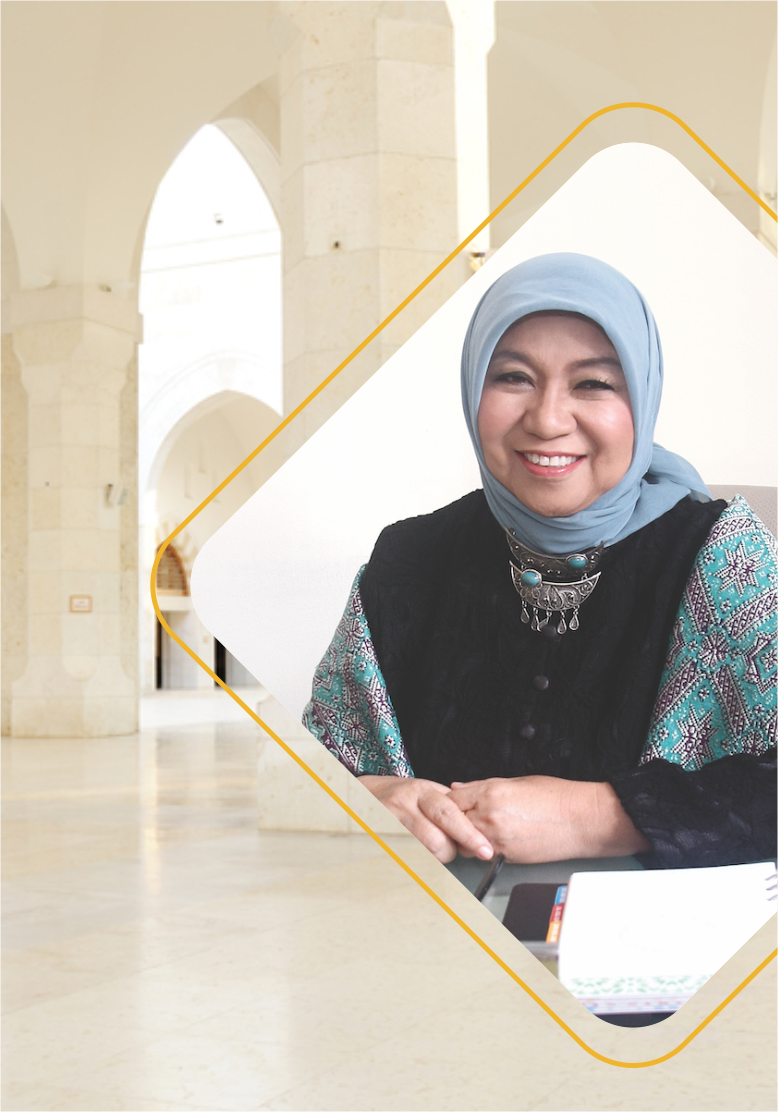
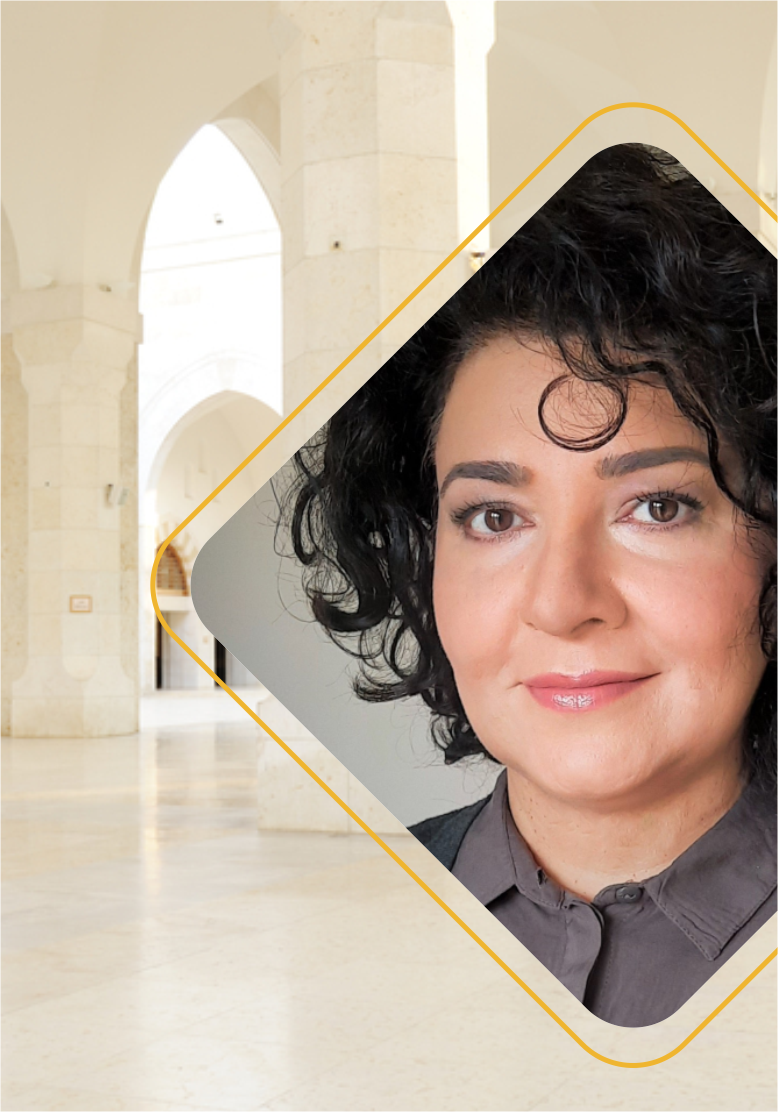
Mah founded Saaf Skincare in 2004, the world’s first known Organic and Halal certified skincare range, alcohol and animal free and thus permissible and lawful under Shariah or Islamic law delivered in accordance with an eco-ethical business model.
She is a Chartered Chemist and is recognised as a pioneer in applying chemistry to the Halal world. She has travelled extensively, speaking at international Halal conferences, writing articles on Halal ingredients and engaging with scientists around the world, culminating in her developing the first Halal standard for the Cosmetics industry.
She has also worked with large multi-national companies to independently verify their ingredients as Halal compliant, as well as international NGOs to develop Halal certification standards for Cosmetics and Pharmaceuticals. She is considered an expert in this field and has been officially recognised for her contribution to the Halal industry by the Malaysian government; recognised as one of the 175 ‘Faces of Chemistry’ (issued by The Royal Society of Chemistry 2016); recognised as an ‘Inspiring Scientist: An Oral History of British Science (issued by The British Library 2014); European Finalist for Cartier Women’s Initiative Award (issued by Cartier 2010), and recognised by President Obama at his 2010 “Presidential Summit on Entrepreneurship” (issued by US Embassy).
Mah was also awarded an MBE in the Queen’s Birthday Honours List (2010) for her contribution to International Trade and the Beauty Industry.
Mah has a degree in Pharmacology from Sunderland University, a Master’sdegree and a PhD from the School of Medicine, University of Leeds and a long standing member of the Royal Society of Chemistry.
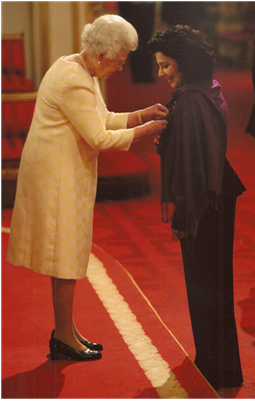
| Awarded an MBE (Most Excellent Order of the British Empire) 2010 |
Mah currently works as a technical consultant for the Halal Certification Organisation in the UK, whose primary aim is to combine the highest standards of Islamic theology with strong evidence-based science.
Business Introduction
When I got married, my husband, who converted to Islam, challenged me on the use of a well-knownbrand of facial toner, which is almost exclusively made out of alcohol. His argument was that scientific studies show that whatever you put on your skin, gets absorbed into your body and smelling the toner and applying on my face morning and night, would potentially mean that my body was taking in alcohol. He was also sensitive to alcohol, and had very dry skin and I made him my first product, a plant and beeswax based balm, which reduced skin dryness, without leaving an oily residue.
The range grew and at one point I had to start charging for my products as there was a lot of interest from people who could not use alcohol, some Muslim consumers (mostly friends and family) as well as a large online shop which catered for British people who were previously dependant on alcohol – alcohol misuse.
At the time I was studying for my PhD, working full time as a Teaching Fellow at the University of Leeds and enjoying small scale home production as a creative distraction from my analytical studying and day job.
Then everything changed when my twin daughters unexpectedly arrived in 2004. I gave up my day job to look after them and officially registered Saaf Skincare as a Limited Company in 2004. The foundation was already laid in my formulations, which were plant based and totally alcohol free, so the next stage was to get independent accreditations from Vegan, Cruelty Free, Vegetarian and Halal certifiers. Professionally brand the packaging and website, get the website translated into as many languages as possible and spread the world globally that Halal does not equal ‘Meat’!
Interview Questions:
What inspired you to start your organisation in the Halal industry?
I will be honest, my organisation (Saaf Skincare) was born out of necessity rather than a plannedventure into the Islamic economy arena. At the time, certainly in the UK, no such thing as ‘Halal certified’ skincare was heard of; British consumers knew about Halal meat, albeit in a negative light due to what was perceived as in-humane animal slaughter at the time.
What were the challenges you had to overcome in the initial stages of starting your organisation?
I see myself as a scientist, with little or no business acumen and that was my biggest hurdle. No one in my family history ever traded, they were all professionals in different fields. Luckily for me, the British government had lots of support for female entrepreneurs, and I took full advantage of the different training schemes and grants available for women and travelled to many countries networking and attracting distributors for Saaf Skincare range.
| My prime motivation was of service to the Muslim community who could confidently use a plant-based halal certified skincare range. |
Once my company grew larger, I had to face financial challenges such as having to buy pallet loads of bottles/lids and getting the products manufactured in a factory. Despite what other entrepreneurs may think, I was of the opinion that its better to have a smaller piece of a larger cake than a large piece of a small cake, so I had no issues with diluting my shareholding in Saaf Skincare to bring in the right calibre of partners, with the relevant business expertise to make the business grow.
After 12 years of trading, my twins were getting older and needed more of my time and I decided to sell the business because the stress of running a business was too much for my health and I valued a good work life balance more than having lots of money in the bank.
And to be honest with you, I loved the research and development side of things, making commercial decisions and watchingfinances/contracts etcis something which did not motivate me. Saaf Skincare was sold to a British company in 2016.
What is the most important thing you feel anyone needs to do to build a successful company in the Islamic Economy?
Let me give you the best advice, you can only build a successful company if youare totally passionate about your product or services. It is not easy, a lot of long hours and stress, and unless you are wholeheartedly committed and self-motivated, it will be difficult to keep going.
My prime motivation was of service to the Muslim community who could confidently use a plant-based Halal certified skincare range, based on thousands of years of scientific evidence for efficacy, as well as non-Muslims who could not use alcohol in any form.
My secondary motivation was to break down any negative stereotypes associated with the word Halal.
I frequently used to get asked by my non-Muslim customers that they were confused because my products had Vegan and Vegetarian certified logos but also had the Halal symbol on!
A lot of my time was spent speaking and writing about Halal and Toyyib, a concept which is way older than the recent green movement in the Western world. Explaining how Halal did not just apply to ritually sacrificed animal meat but can also be applied to ethically run business, which cared for the environment as well as human bodies. I am so pleased to increasingly see Halal being viewed as synonymous with Toyyib (wholesome) by consumers.
What were the most important learning experiences you would like to share?
Start small. I launched Saaf Skincare with 12 different products, and if there is one bit of advice you can take away from reading this, is to start with one ‘hero’ product – and as your brand grows, launch more products. Take baby steps, don’t rush.
If you can afford it, get a PR agency involved at the start, they are well worth the investment. I also found constantly writing articles in relevant communication media and women’s magazines to be highly effective, as is networking at every opportunity you get, be brave, speak at conferences, let your passion shine through.
What advice would you give aspiring leaders in the Islamic Economy?
Always be mindful of what Halal actually means, the ethics underpinning Halal may not always be congruent with running a business these days. Don’t compromise your principles.