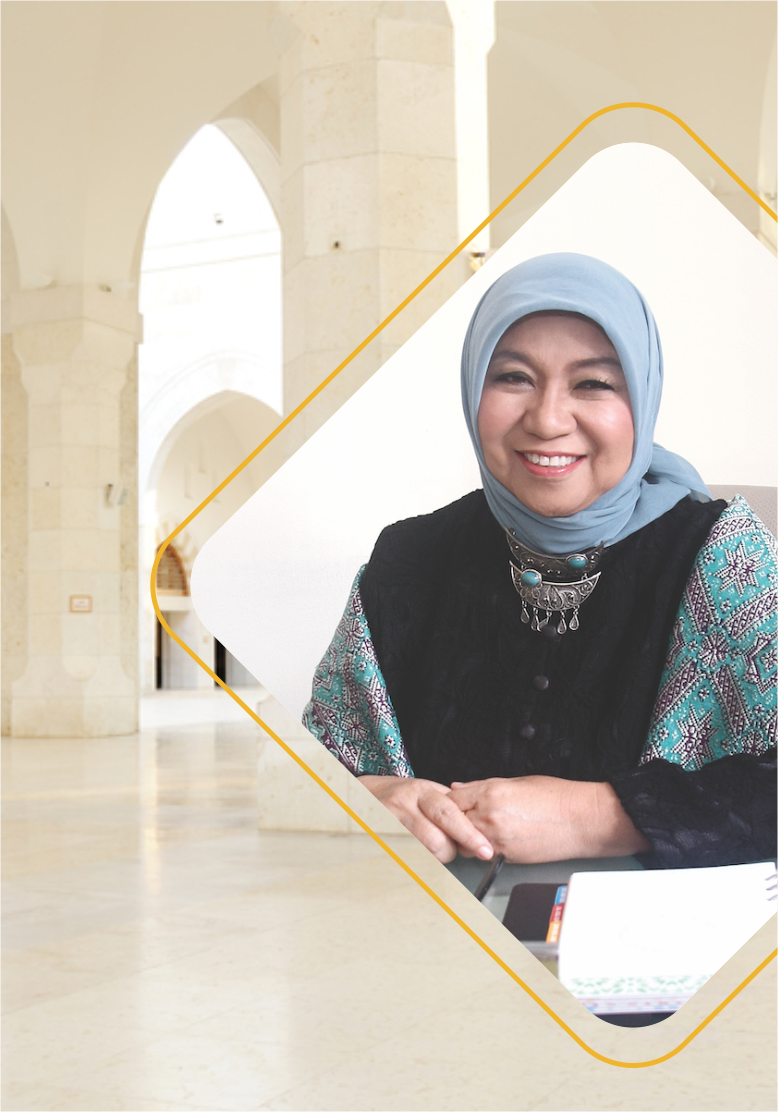
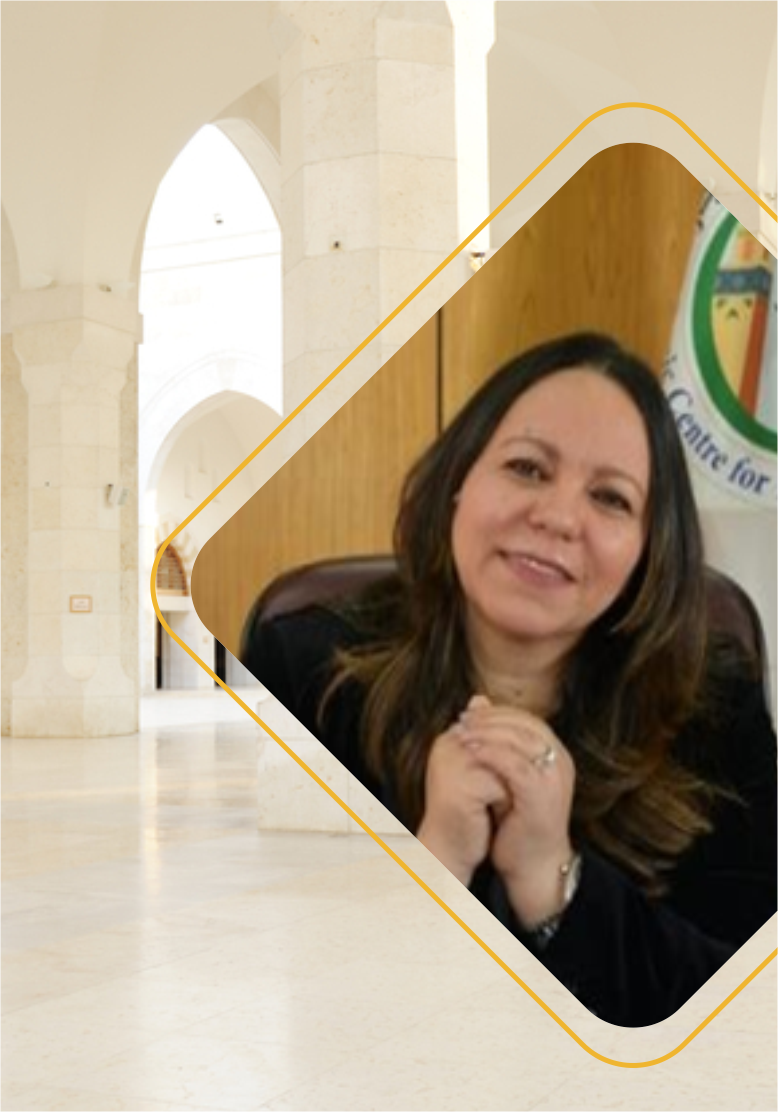

Country: Kingdom of Morocco
Organisation Name: ICDT – Islamic Centre for Development of Trade
Started in the Year: 2020
Significant Position(s):
-Since February 2020: Director General of ICDT
-From 2013 to 2019: Mrs. El Bouabdellaoui was Head of International Trade Relations at the Ministry of Industry, Trade, and Green and Digital Economy of the Kingdom of Morocco
Website: www.icdt-cidc.org
Personal Introduction:
Mrs. El Bouabdellaoui is an engineer, graduate of the National School of Mining Industry (ENIM) in 1993 and the Higher Institute of Commerce and Business Administration in 2001 (ISCAE). She holds certificates from the London Business School.
Professional Introduction:
Mrs. Latifa Elbouabdellaoui – Director General of the Islamic Center for Development of Trade (ICDT), took office on February 2020. Previously, she was Director of International Trade Relations at the Ministry of Industry, Trade and Green and Digital Economy of the Kingdom of Morocco from 2013 to 2019. Mrs. Elbouabdellaoui has a large and extensive expertise in the domain of International Trade, notably in terms of developing trade policies, negotiating bilateral and multilateral trade agreements and implementing commercial and industrial cooperation projects with international partners. During her career at the Ministry of Industry, Trade and Green and Digital Economy of the Kingdom of Morocco, she was the Chief negotiator of Morocco for many trade-related topics. Formerly, she contributed to developing the industrial strategy at the Ministry of industry. Mrs. Latifa Elbouabdellaoui is an industrial process engineer and a graduate of Management of Organizations.
Interview Questions:
What inspired you to start your career in the Islamic Economy?
According to a study conducted by the Centre to identify products with high trade potential among the 57 OIC Member States, it revealed that the Halal Industry has a great potential to develop intra-OIC trade as only 3 Member States appear in the top 20 exporting countries of Halal certified products.
Indeed, despite macroeconomic challenges, the global Halal economy constitutes a unique opportunity for the Organization of Islamic Cooperation (OIC) Member States. This is underpinned by key factors, including the expanding Muslim consumer base eager to make choices aligned with Islamic values, and the growing popularity of halal products and services. However, opportunities presented by the Halal economy ecosystem remain relatively untapped by OIC countries.
What were the challenges you had to overcome in the initial stages of starting your career?
For nearly four decades, the Islamic Centre for Development of Trade (ICDT) has strived to facilitate trade and investments across OIC countries by promoting Halal economy products and services, developing partnerships and strategic alliances among the stakeholders of Member States, disseminating information on intra-OIC supply and demand, and fostering best practices.
The most challenging part in this adventure was to raise the awareness of OIC Member countries on the importance of the Halal industry by organizing series of activities. Besides, the Centre was the initiator of the first edition of the Halal Exhibition of OIC Member States in 2012 in Sharjah-UAE.
To date, 4 editions in Sharjah – UAE and 5 others in Istanbul were organised and ICDT plans to organize the 10th Exhibition of Halal Products of OIC Member States, 31 May-4 June 2023, Tunis – Republic of Tunisia, and a specialized exhibition in Bahrain (Bahrain Halal Expo, 4-6 May 2023, Sakhir Region – Kingdom of Bahrain).
It is worth mentioning that the Centre was the driving force behind the creation of a sub- theme dedicated to Halal industry, as well as the programming of integrated activities among the different OIC institutions working on enhancing intra-OIC trade and investment.
What is the most important thing you feel anyone needs to do to build a successful initiative/organisation in the Halal/Islamic Economy?
Governments of the OIC countries are actively regulating imports of products according to Halal certification requirements and guidelines, especially through specialized national bodies. These national authorities include the UAE’s ESMA and EIAC, Saudi Arabia’s SFDA, OIC’s SMIIC, Morocco’s IMANOR and Malaysia’s JAKIM, all of which monitor and provide accreditation to Halal certification bodies. Indeed, increased government contribution results in increased awareness of Halal product requirements and compliance by manufacturing companies, hence enhancing the growth of various Islamic economy sectors.
According to industry executives working within various Islamic/Halal economy sectors, government support and market-friendly regulations significantly impact the growth of Halal markets.
| The Islamic economy has become a central focus for many countries, including non- Muslim majority countries since they identified the economic growth generated by economic diversification. |
The Islamic economy has become a central focus for many countries, including non- Muslim majority countries since they identified the economic growth generated by economic diversification. The OIC countries such as Saudi Arabia, UAE, Nigeria, Indonesia, and more have proactively implemented various programs with the OIC agencies to expand the ever-growing Islamic economy worldwide.
Moreover, Many Member States are also investing in developing south-south cooperation.
These initiatives are becoming increasingly important given the challenges arising from global supply chain. To this end, OIC Member States look to near-shore their supply chains, develop domestic capabilities, and address various macro challenges, such as geopolitical crises, food insecurity, and rising inflation.
What were the most important learning experiences you would like to share?
Food security has become an important concern in OIC countries due to the implications of the COVID-19 pandemic and the Ukraine crisis. To address this issue, OIC countries have initiated efforts to reduce their reliance on non-OIC imports and bolster intra-OIC trade. However, the lack of a unified Halal food standard across OIC countries complicates trade flows.
Accredited or recognized Halal certificates from OIC members should be accepted among OIC members. A certified company should not face a problem exporting to GCC, Malaysia, Pakistan, and others; in fact, each respective OIC country’s regulations should mutually recognize each other’s accreditation body.
Meanwhile, it is worth noting that increased consumer demand for food delivery and healthy (organic, plant-based) food options have given rise to eCommerce and food delivery platforms, along with plant-based food products, with several investments in food delivery platforms and ghost kitchens in 2021. However, obtaining Islamic financing remains a challenge for many small companies across the Halal food supply chain.
What advice would you give to aspiring leaders in the Halal/Islamic Economy?
Aside from several initiatives undertaken by stakeholders, there is room for considerable growth and empowerment, especially across the least developed OIC economies. In this regard, the 2022 Annual OIC Halal Economy Report, published by ICDT, outlines a list of recommendations covering the halal economy ecosystem at a government policy level or government-to-government cooperation level, as well as sector-specific strategic and tactical recommendations for industry stakeholders and investors.
This report identifies 20 actionable Strategies for OIC organs and Member States to explore and implement, grouped into five strategic categories: national economic resilience building, intra-OIC/south-south cooperation, research and innovation, Halal economy promotion and awareness, and investment attraction and facilitation.
In this regard, ICDT will pursue the organization of capacity building programs, Expos, forums, dashboards, and reports on the Halal economy for the benefit of Member States, a fact that will contribute to reinforce trade and investment flows in the Halal sectors.