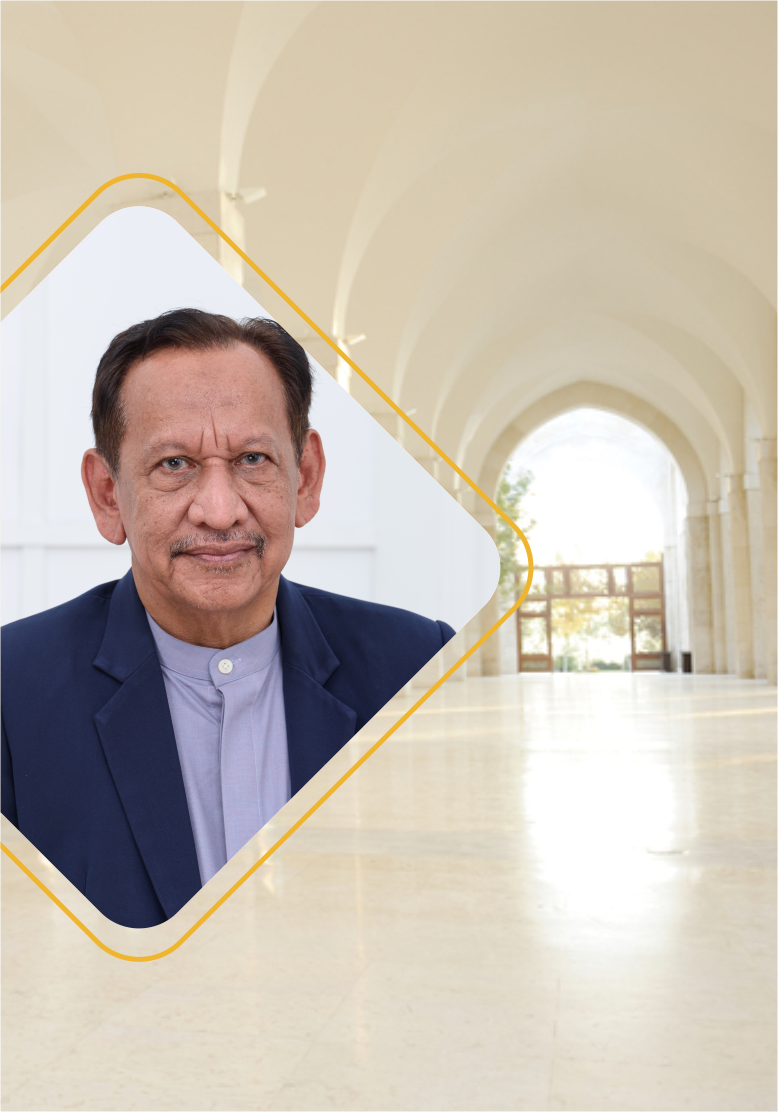
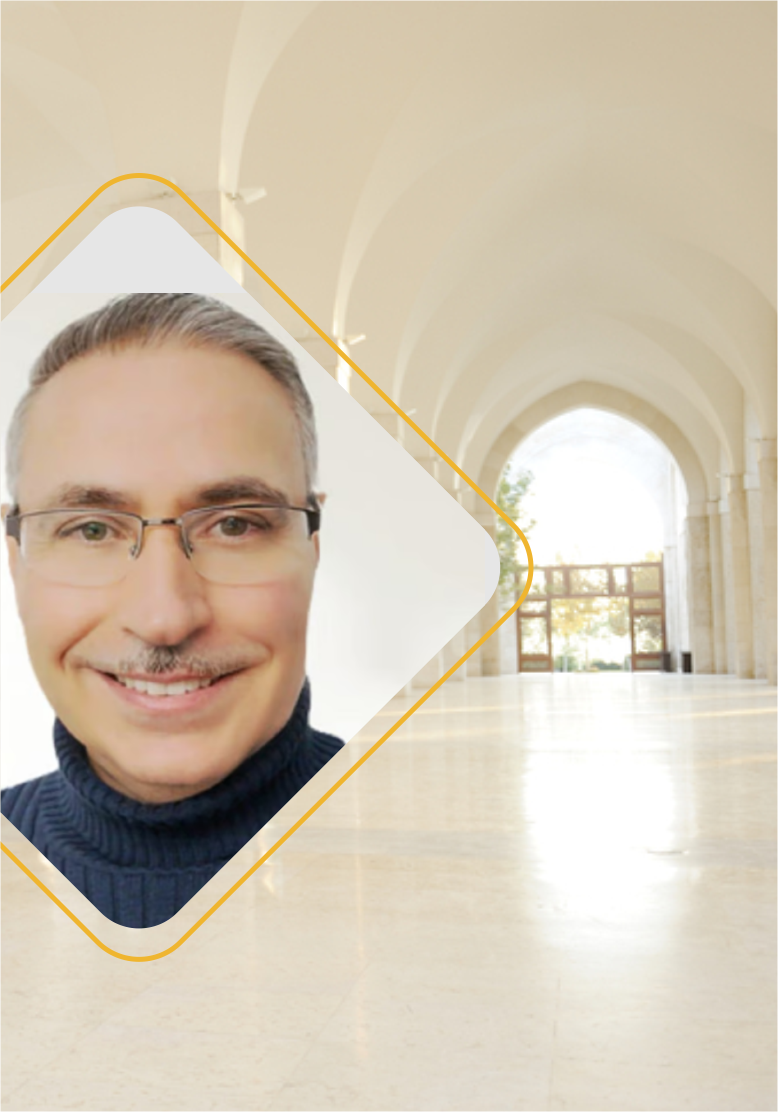

Name: Jawad Alzeer
Country: Switzerland
Organisation: University of Zurich
Year of Starting in the Halal industry: 2010
Significant Positions: Senior Scientist (UZH), Adjunct Professor (PPU), Managing Director (SWISSSDC)
Background and Personal History
Personal Introduction:
I am a passionate scientist and thinker from the city of Hebron in Palestine. After finishing high school at Alhusein, I continued my education with a focus on exploring the world around me. My journey has always been fuelled by curiosity and a strong desire to learn and understand. From a young age, I had a deep love for learning, which led me to explore various subjects like chemistry, medicine, quantum physics, and psychology. However, it was my fascination with chemistry that truly sparked my intellectual passion. |
Professional Introduction:
I am a senior scientist in the Department of Chemistry at the University of Zurich, where my work focuses on the design and development of anticancer drugs at the interface of molecular chemistry and biological regulation. Alongside my contributions to pharmaceutical and chemical research, I have developed interdisciplinary frameworks that aim to expand how medicine understands health, disease, and recovery. One of my key contributions is the introduction of Halalopathy, a medical model designed to bridge modern medicine with Prophetic medicine through the language of thermodynamics. Halalopathy does not replace contemporary biomedical practice; rather, it provides a unifying framework that translates ethical, spiritual, and behavioral principles into scientifically interpretable concepts such as balance, entropy, and potential energy. Through this approach, Halalopathy seeks to reconnect medical treatment with trust, meaning, and internal regulation, particularly in the context of chronic disease and mental health. Building on this foundation, I developed Lifestylopathy as a broader and more general health model that bridges holistic concepts of human well-being with modern medicine, which has traditionally focused primarily on the physical body while marginalizing the roles of mind and spirit. Lifestylopathy integrates chemical, physical, psychological, and voluntary dimensions of human life within a thermodynamic framework, emphasizing long-term regulation, resilience, and the dynamic balance between order and disorder in living systems. My work spans multiple disciplines, including chemistry, cancer immunoregulation, psychology, quantum physics, and integrative and complementary medicine. In parallel, I have proposed a refined perspective on entropy in chemistry and biology, challenging static interpretations and highlighting its functional and regulatory role in chemical reactivity, biological organization, and health. Through this integrative scientific approach, I aim to contribute to a more comprehensive understanding of medicine—one that preserves the strengths of modern biomedical science while reintegrating ethical, psychological, and spiritual dimensions essential to human healing. |
- Personal Journey:
- What is your background, and how did you get started in the Halal industry?
My background is interdisciplinary, rooted in chemistry and biomedical sciences, and shaped by lived experience in Hebron, Palestine—a city with a deep historical and ethical relationship to food, trade, and trust. Growing up in this environment fostered an early awareness of how values, culture, and daily practices intersect with what people consume and how systems operate. My formal engagement with the Halal industry began in Switzerland, where my scientific expertise in chemistry, safety assessment, and systems analysis led to an invitation from Halal Certificate Services to serve as a lead Halal auditor. This role allowed me to apply scientific rigor to Halal certification, moving beyond symbolic compliance toward verifiable integrity. As a lead auditor, I worked at the interface of science and faith, assessing complex supply chains, production technologies, contamination risks, and labeling practices. My focus was not merely procedural conformity, but the preservation of Halal–Tayyib integrity—ensuring that permissibility was matched by safety, quality, and transparency. This experience laid the foundation for my broader work in Halal governance and ultimately informed the development of conceptual frameworks such as Halalopathy and Lifestylopathy, which seek to integrate ethics, science, and systems thinking in contemporary health and industry contexts. |
- What inspired you to pursue a career in the Halal sector?
My motivation stemmed from a desire to understand why a halal lifestyle matters—not only from a religious perspective, but in terms of its broader implications for human health, ethics, and societal well-being. I was particularly interested in exploring the benefits of halal living through a scientific lens and in examining how its underlying principles could be developed, validated, and communicated in a way that is meaningful at a global level. This curiosity led me to investigate halal as a comprehensive framework that integrates safety, integrity, and responsibility, rather than as a set of isolated rules. My work in the Halal sector has therefore focused on translating these principles into scientifically grounded systems and practices that can support health, trust, and sustainability across cultures and industries. |
- Can you describe your educational and professional background before entering the Halal industry?
Educational Background My academic training is rooted in chemistry, with a strong focus on molecular design and biomedical applications. After completing my doctoral studies in organic chemistry at ETH Zurich, I developed a solid foundation in advanced chemical synthesis, structure–function relationships, and translational research. This scientific training provided the analytical rigor and methodological depth that later informed my interdisciplinary work across medicine, health systems, and ethics. Professional Journey Before entering the Halal sector, my professional career spanned both pharmaceutical research and academic science. I worked in drug discovery and development, contributing to projects in antimalarial and antiviral therapeutics, including the identification of novel reverse transcriptase inhibitors. I later joined the University of Zurich, where my research focused on cancer-related chemical strategies, particularly the design and evaluation of telomerase inhibitors, as well as the investigation of bioactive compounds from medicinal plants. In parallel, I founded the Swiss Scientific Society for Developing Countries (SSSDC), an initiative aimed at strengthening research, education, and innovation collaborations between Switzerland and developing regions. This combination of scientific research, translational medicine, and international collaboration laid the groundwork for my later engagement with the Halal sector, where scientific rigor, ethical responsibility, and systems-based thinking intersect. |
- Motivations and Influences:
- Who or what were your biggest influences when you began your journey in the Halal industry?
My entry into the Halal industry was shaped less by individual figures and more by the convergence of scientific responsibility, ethical conviction, and professional experience. My background in chemistry and pharmaceutical research made me acutely aware of how complex modern production processes can obscure safety, origin, and integrity—particularly in pharmaceuticals and chemical products. Engagements with interdisciplinary research communities and exposure to real-world certification challenges reinforced the need for a Halal framework grounded in evidence, transparency, and accountability. These experiences, combined with a personal commitment to aligning scientific practice with ethical responsibility, guided my work toward strengthening Halal compliance in complex technological domains and contributing to the credibility and integrity of the industry. |
- How does your personal faith and beliefs influence your work in the Halal industry?
My personal faith provides an ethical compass rather than a set of assumptions. It shapes how I understand responsibility, trust, and accountability in systems that directly affect human health and well-being. Rather than approaching Halal as a purely symbolic or identity-based concept, my beliefs motivate me to treat it as a framework that must withstand scientific scrutiny and real-world complexity. This perspective has driven my commitment to grounding Halal practices in evidence, transparency, and methodological rigor—particularly in technologically advanced sectors such as pharmaceuticals, chemicals, and complex supply chains. Faith, in this sense, does not replace science; it demands excellence from it. It encourages a holistic understanding of Halal that integrates ethical intention, material safety, and human impact. Ultimately, my beliefs inspire me to contribute to a Halal ecosystem that serves both individual well-being and societal trust—one in which compliance is matched by integrity, and spiritual values are reflected through measurable quality, safety, and responsibility. |
Industry-Specific Contributions
- Sector-Specific Questions:
- Which sector of the Halal industry are you involved in (food, finance, pharmaceuticals, cosmetics, logistics, tourism, etc.)?
Food, Pharmaceuticals, Cosmetics |
- What were the main challenges you faced when you started in this sector?
One of the primary challenges was addressing the gap between religious expectations and the realities of modern scientific and industrial practice. In complex sectors such as pharmaceuticals, chemicals, and processed foods, ensuring the Halal status of ingredients and processes is not only a matter of religious compliance, but also of scientific verification, traceability, and system integrity. Equally challenging was communicating this perspective beyond the Muslim community. It was important to demonstrate that Halal is not an insular or symbolic concern, but a framework that demands high standards of quality, safety, and ethical responsibility—standards that are relevant to all consumers. Bridging these conceptual and practical gaps required translating faith-based principles into evidence-based processes that could be understood, implemented, and trusted across diverse professional and cultural contexts. |
- Can you highlight some key innovations or contributions you have made in this sector?
Scientific Clarification of Contested Substances (Ethanol and CBD) One of my early contributions addressed the Halal evaluation of scientifically complex and widely debated substances, particularly ethanol and cannabidiol (CBD). By examining their chemical nature, production pathways, and functional use, I helped clarify how such substances should be assessed within a Halal framework. This work supported evidence-based decision-making for both consumers and industries, moving the discussion beyond generalized assumptions toward scientific and juridical precision. Reframing the Halal–Tayyib Relationship A central conceptual contribution of my work has been the clear differentiation between Halal and Tayyib. I articulated Halal as the gate of permissibility—what is allowed to enter—while Tayyib reflects the outcome after use, encompassing safety, quality, wholesomeness, and human well-being. This distinction shifted Halal evaluation from a narrow compliance exercise toward a functional and outcome-oriented framework that better aligns with public health and consumer expectations. Introduction of the Halal–Tayyib Positive List Building on this distinction, I proposed the concept of a Halal–Tayyib positive list, moving Halal assessment from a prohibition-based logic to a proactive system that identifies substances and practices that are not only permissible, but demonstrably safe and beneficial. This approach supports innovation, transparency, and trust, and provides a constructive pathway for industries developing new products and technologies. Integration of Good Agricultural Practices with Halal Standards I contributed to aligning Good Agricultural Practices (GAP) with Halal requirements, demonstrating their compatibility rather than treating them as parallel or competing systems. This work emphasized ethical sourcing, food safety, sustainability, and traceability as shared values, strengthening Halal integrity across the agricultural and production chain. Engagement with Emerging Technologies (Cultured Meat) As part of forward-looking Halal research, I addressed the Halal and ethical implications of cultured meat, applying a combined analysis of jurisprudence, science, and systems thinking. This contribution helped frame cultured meat not as a binary permissibility issue, but as a complex technological development requiring careful evaluation of process, purpose, and impact. Scientific Evaluation of Food Additives (Cochineal-Derived Red Colorants) I also examined the Halal status of food additives such as red colorants derived from cochineal, focusing on their biological origin, processing steps, and transformation. By grounding the discussion in chemical and production realities, this work contributed to clearer, more consistent Halal assessments of widely used additives. Introduction of Halalopathy as a Bridging Medical Model In the medical domain, I introduced Halalopathy as a conceptual model designed to bridge modern medicine with Prophetic medicine through the language of thermodynamics. Halalopathy translates ethical and spiritual principles into scientifically interpretable concepts such as balance, entropy, and regulation. It provides a complementary framework that connects medical treatment with lifestyle compatibility, trust, and patient-centered care, while operationalizing the Halal–Tayyib concept within healthcare contexts. |
- Market Insights:
- How has the Halal industry evolved since you first entered it?
When I first entered the Halal sector, the prevailing understanding was relatively narrow. Halal was often interpreted in binary terms—primarily defined by the absence of alcohol or prohibited animal ingredients. This approach assumed that products free from these elements were automatically compliant, overlooking the complexity of modern production processes and the scientific information required for accurate assessment. Over time, the industry has matured significantly. There is now greater recognition that Halal evaluation must account for the full lifecycle of a product, including sourcing, processing, transformation, contamination risks, and quality control. As industries became more technologically advanced, the need for traceability, analytical verification, and process transparency became increasingly evident. Importantly, the sector has also moved toward a more integrated understanding of Halal and Tayyib. Halal is no longer seen solely as a matter of permissibility, but as part of a broader framework that includes safety, cleanliness, integrity, and suitability for human well-being. This shift reflects a growing alignment between Halal principles and contemporary standards in food safety, quality management, and ethical production, marking a transition from rule-based compliance toward a more comprehensive and responsible Halal ecosystem. |
- What trends do you see currently shaping the future of the Halal industry?
The Halal industry is moving from fragmented compliance toward system-based governance, where traceability, data integrity, and process transparency are central. Technologies such as blockchain and digital documentation are increasingly used to support continuity of trust across complex supply chains. Halal is also expanding beyond food into pharmaceuticals, cosmetics, healthcare, and tourism, requiring more rigorous scientific and risk-based evaluation. At the same time, growing attention to sustainability, ethics, and health is reinforcing the Halal–Tayyib framework, linking permissibility with quality and responsibility. Together with efforts toward standard harmonization and professionalization, these trends point to a more mature, credible, and resilient Halal ecosystem. |
Challenges and Achievements
- Overcoming Challenges:
- What are some significant obstacles you have encountered in your career?
One of the most persistent challenges has been addressing the gap between simplified perceptions of Halal and the scientific complexity of modern production systems. Determining Halal status today requires far more than excluding alcohol or certain animal sources; it demands detailed knowledge of ingredients, transformation processes, contamination risks, and functional use—areas where data are often incomplete or poorly communicated. Another major obstacle has been translating the broader Halal–Tayyib concept into industrial practice. While Halal compliance is often approached as a formal requirement, Tayyib encompasses safety, quality, cleanliness, and suitability for human well-being. Communicating this integrated perspective to industries operating under commercial and technical constraints has required sustained effort. Finally, the lack of global harmonization in Halal standards and certification practices remains a structural challenge. Variations in interpretation, methodology, and governance complicate international trade and undermine consumer confidence. Addressing this fragmentation has required balancing jurisprudential principles with scientific evidence and practical implementation across diverse regulatory environments. |
- How did you overcome these challenges?
I addressed these challenges by shifting the discussion from simplified compliance toward evidence-based systems thinking. Rather than relying on assumptions, I emphasized rigorous scientific analysis, process transparency, and access to complete technical information to support accurate Halal assessments—particularly for complex ingredients and modern production technologies. At the same time, I worked to reframe Halal for industry stakeholders by integrating the Halal–Tayyib concept into practical evaluation models. This meant translating abstract principles—such as safety, cleanliness, cross-contamination control, and suitability—into measurable criteria aligned with existing quality and risk-management systems. |
- Achievements:
- What do you consider to be your most significant achievement in the Halal industry?
My most significant achievement has been contributing to a shift in how Halal is understood and applied—from a narrow compliance concept to an evidence-based framework that integrates safety, quality, trust, and human well-being. Through my research on Halal and Tayyib, I have worked to ground Halal evaluation in scientific rigor while preserving its ethical and spiritual foundations. A central contribution in this regard is the introduction of Halalopathy, a conceptual model that bridges modern medicine with Prophetic medicine through a thermodynamic and systems-based language. Halalopathy translates principles such as balance, trust, and permissibility into medically interpretable concepts, offering a complementary approach to personalized medicine that integrates physical, psychological, and ethical dimensions of health. This work extends beyond the Halal sector and contributes to broader discussions on patient-centered and integrative healthcare. In parallel, I have addressed critical technical questions within the Halal industry, including the scientific evaluation of ethanol in food and pharmaceutical contexts. By differentiating between types, sources, and functions of ethanol, my work has helped clarify Halal assessments of complex ingredients, supporting more accurate certification, consumer confidence, and product safety. Taken together, my contributions aim to strengthen Halal as a credible, transparent, and forward-looking system—one that serves both religious integrity and public health, and that remains relevant in the context of modern science and personalized medicine. |
- Are there any specific projects or milestones that you are particularly proud of?
Yes—there are several milestones I am particularly proud of, as they reflect my contribution to advancing the Halal field through science, ethics, and practical impact. Halalopathy One of my most significant achievements is the development of Halalopathy, a pioneering scientific and medical framework that explicitly links Halal with Tayyib. In this model, Halal is not treated as permissibility alone, but as inseparable from Tayyib—meaning safety, wholesomeness, physiological compatibility, and overall benefit to the individual. Halalopathy introduces the concept of compatibility between the patient, the therapy, and the lifestyle, aiming to create synergy that supports complete recovery rather than isolated symptom management. This framework has helped reframe discussions around personalized, faith-aligned medicine and ethical healthcare systems. Halal–Tayyib and Ethanol Research Another milestone is my research on the Halal status of ethanol, where I provided a scientific distinction between chemical presence, functional use, toxicity, and intoxication—bringing clarity to a topic often approached in overly simplistic terms. My publication on Halal–Tayyib has been cited over 250 times, demonstrating its academic influence, while my manuscript on ethanol has reached more than 60,000 readers, making it one of the most widely read works in this area and, at one point, the most-read publication in the Chemistry Department at the University of Zurich on ResearchGate. Editorial Leadership In addition to my own research, I have served as an editor for two academic books. The first, Halal Perspectives in Medicinal Chemistry, has already been published and brings together interdisciplinary perspectives on drug discovery, formulation, and compliance within the Halal–Tayyib framework. The second book, Halal Perspectives in Science and Technology for Products and Services, has been submitted and is currently under review. Through my editorial work, I have focused on ensuring scientific rigor, conceptual clarity, and consistent integration of Halal–Tayyib principles across contributions from international experts. |
Impact and Legacy
- Industry Impact:
- How has your work impacted the Halal industry in your country and globally?
My work has contributed to shifting the Halal industry—from both a scientific and practical perspective—away from a narrow focus on permissibility toward a more integrated Halal–Tayyib framework. In Switzerland, where Muslims are a minority but highly diverse, my research has helped introduce clarity and scientific depth into Halal discussions, particularly in areas such as food ingredients, pharmaceuticals, and healthcare-related products. By addressing complex topics like ethanol with chemical, toxicological, and functional differentiation, my work has supported certifiers, professionals, and consumers in making informed decisions rather than relying on oversimplified rulings. This has been especially important in a regulatory and scientific environment where credibility and evidence are essential. Globally, my impact has been broader in scope. Through highly cited publications on Halal–Tayyib and widely read work on the Halal status of ethanol, I have contributed to international discourse across academia, certification bodies, and industry stakeholders. These works have helped reframe Halal as not only a religious requirement, but also a quality, safety, and compatibility standard—one that resonates with both Muslim and non-Muslim audiences. Through Halalopathy, I introduced a conceptual framework that links Halal and Tayyib to human health, medicine, and lifestyle compatibility. This has influenced how Halal is discussed beyond food—extending into pharmaceuticals, medical ethics, and personalized healthcare. Additionally, my editorial work on international books in Halal science has helped shape interdisciplinary dialogue and align contributions from researchers across chemistry, medicine, and technology under a coherent Halal–Tayyib vision. Overall, my contribution lies in building intellectual infrastructure for the Halal industry—providing scientific clarity, ethical grounding, and conceptual tools that support trust, innovation, and global collaboration. |
- What changes have you seen in consumer behavior and industry practices due to your efforts?
I have observed clear changes on both the consumer and industry sides, particularly where scientific clarity and trust were previously lacking. Shift in Consumer Awareness and Expectations Consumers—especially those who are health-conscious and faith-oriented—have become more discerning. Rather than asking only whether a product is Halal, many now ask whether it is also Tayyib: safe, non-toxic, compatible with their body, and supportive of long-term well-being. This shift reflects the influence of my work on Halal–Tayyib and Halalopathy, where Halal is understood as a quality and compatibility concept rather than a checkbox. In health and wellness contexts, I have seen growing interest in holistic approaches that integrate nutrition, lifestyle, and spiritual alignment—particularly in health tourism and wellness programs that explicitly reference Halalopathy principles. Changes in Industry and Certification Practices—Especially Regarding Ethanol On the industry side, my research on the Halal status of ethanol has contributed to more nuanced and responsible practices. Manufacturers and certification bodies are increasingly moving away from blanket assumptions and toward evidence-based evaluation, differentiating between ethanol’s chemical presence, functional role, toxicity, and intoxicating potential. Overall, the most important change I have seen is a maturation of the Halal ecosystem: consumers are better informed and more intentional, while industries are more scientifically grounded, transparent, and aligned with the true Halal–Tayyib philosophy. |
- Social Responsibility:
- How do you ensure that your work adheres to ethical and Halal standards?
I ensure ethical and Halal compliance by treating Halal and ethics as a unified scientific–moral framework, not as parallel or secondary considerations. My approach is grounded in rigorous research, continuous learning, and methodological clarity—especially in areas where chemistry, health, and Halal jurisprudence intersect. At the core of my work is the inseparable link between Halal and Tayyib. I do not assess permissibility in isolation; every evaluation also considers safety, toxicity, physiological compatibility, long-term impact, and ethical responsibility. This principle is central to my Halal–Tayyib publications and to the Halalopathy framework, where ethical integrity and human well-being are treated as measurable and actionable criteria. To ensure accuracy and balance, I work at the interface of disciplines—engaging with Islamic scholars, scientists, healthcare professionals, and certification experts. This interdisciplinary collaboration allows traditional Islamic principles to be applied correctly within modern scientific and industrial contexts, avoiding both rigid literalism and unjustified leniency. |
- What initiatives have you taken to promote sustainability and social responsibility within the Halal industry?
I promote sustainability and social responsibility by framing them as intrinsic elements of Halal–Tayyib, not as external or optional goals. In my work, environmental care, human well-being, and ethical responsibility are direct extensions of Islamic principles and scientific accountability. Through research and publication, I have emphasized that a product cannot be truly Halal if it is harmful—to the human body, to society, or to the environment. This perspective has influenced discussions around ingredient sourcing, processing methods, and long-term health impact, particularly in food, pharmaceuticals, and personal care products. In education and thought leadership, including my editorial work on international Halal science books and my development of the Halalopathy framework, I consistently highlight sustainability as part of Tayyib: clean production, responsible use of resources, transparency, and respect for human dignity. This has helped shift attention from short-term compliance toward long-term value and trust. Overall, my initiatives focus on building a value-driven Halal ecosystem, where sustainability, social responsibility, and consumer trust are natural outcomes of a properly understood Halal–Tayyib framework, rather than separate compliance exercises. |
Future Vision
- Future Plans:
- What are your plans for the future within the Halal industry?
My future plans focus on deepening and systematizing the Halal–Tayyib framework across sectors where Halal still tends to be treated narrowly—particularly healthcare, pharmaceuticals, wellness, and certification science. I intend to continue producing research and educational material that strengthens the scientific foundations of Halal decision-making and aligns them with ethics, sustainability, and human well-being. A key priority is expanding the application of Halalopathy beyond theory into structured programs—especially in health tourism, wellness, and preventive medicine—through collaboration with institutions, policymakers, and international stakeholders. In parallel, I aim to contribute to improving certification standards by promoting evidence-based evaluation, transparency, and long-term impact assessment, rather than checklist compliance. I am also interested in responsibly integrating emerging technologies—such as data-driven traceability, personalized health analytics, and advanced material science—where they genuinely support Halal–Tayyib objectives without compromising ethical boundaries. |
- What goals do you still hope to achieve?
One of my central goals is to see Halalopathy recognized and implemented as a legitimate, complementary medical framework in multiple countries, particularly in systems open to personalized and preventive care. This includes developing clear clinical, educational, and ethical guidelines that allow Halalopathy to be applied responsibly and consistently. I also aim to advance personalized patient care by formally linking lifestyle, belief systems, and physiological compatibility with medical treatment. My goal is to help shift healthcare toward models that respect individuality—where treatment effectiveness is enhanced through alignment between medicine, behavior, and values. Ultimately, I hope to contribute to a Halal industry that is intellectually mature, ethically grounded, and globally trusted—one that serves not only religious compliance, but genuine human health, dignity, and sustainability. |
- Advice to Aspiring Professionals:
- What advice would you give to young professionals looking to enter the Halal industry?
My advice is to treat Halal as a responsibility, not an opportunity alone. Do not approach the Halal industry with the mindset of minimum compliance or quick market entry. Instead, understand Halal as a value system rooted in accountability, trust, and service to humanity. Young professionals should invest deeply in knowledge—not only in Islamic principles, but also in science, ethics, and real-world application. Creativity and innovation are essential, but they must be anchored in integrity. When Halal is properly understood and implemented, it naturally unlocks innovation because it demands clarity, transparency, and respect for human well-being. Most importantly, I would encourage them to always link Halal with Tayyib. A product or service may be technically permissible, but if it harms health, society, or the environment, it fails the higher purpose of Halal. Carrying this awareness is what allows professionals to contribute meaningfully rather than superficially. |
- How can the next generation continue to innovate and improve the Halal industry?
The next generation can move the Halal industry forward by shifting from rule-based thinking to principle-based innovation. This means using technology and science not to bypass standards, but to strengthen them—through better traceability, evidence-based certification, and transparent communication. Innovation should also focus on sustainability and human-centered design: ethical sourcing, environmental responsibility, and products that genuinely improve quality of life. Collaboration across disciplines—between scholars, scientists, engineers, and industry leaders—will be essential to avoid fragmentation and inconsistency. Finally, education is key. The future of the Halal industry depends on professionals who can explain why something is Halal and Tayyib, not just that it is. When knowledge, ethics, and innovation move together, the Halal industry can mature into a globally respected standard of quality, trust, and responsibility. |
Cultural and Global Perspectives
- Global Perspectives:
- How do you see the global Halal industry differing from country to country?
The global Halal industry differs significantly from one country to another, largely because Halal is practiced at the intersection of religion, culture, regulation, and scientific capacity. While the foundational Islamic principles are universal, their interpretation and implementation vary depending on legal frameworks, market maturity, institutional trust, and access to scientific expertise. In some countries, Halal is highly institutionalized and driven by centralized authorities, whereas in others—particularly minority-Muslim contexts—it relies more heavily on scientific justification, transparency, and cross-disciplinary dialogue. Consumer expectations also differ: in certain regions, Halal is primarily associated with food, while in others it extends to pharmaceuticals, cosmetics, healthcare, and lifestyle. These differences highlight the need for adaptable yet principled frameworks that preserve the essence of Halal while remaining context-aware. This is precisely why linking Halal with Tayyib—through safety, compatibility, and ethical responsibility—is so important. It provides a universal anchor that can guide Halal implementation across diverse national contexts without fragmenting its meaning. |
- Can you share any experiences or collaborations with pioneers from other countries?
Yes—one meaningful example is my research on the Halal status of CBD, which involved collaboration between experts and institutions from Switzerland, Egypt, and Palestine. This project brought together scientific, regulatory, and religious perspectives from very different contexts, each with its own legal systems, cultural sensitivities, and Halal frameworks. Such collaboration was essential because CBD sits at a complex intersection of chemistry, medicine, regulation, and Islamic ethics. By pooling expertise across borders, we were able to approach the topic responsibly and avoid narrow, country-specific conclusions. Experiences like this have reinforced my belief that the future of the Halal industry depends on international cooperation, shared scientific standards, and open intellectual exchange, especially for emerging and sensitive topics. These collaborations do not just resolve individual questions—they help build a more coherent, globally credible Halal ecosystem grounded in knowledge rather than isolation. |
- Cultural Integration:
- How do you integrate local cultural practices with global Halal standards in your work?
I integrate local cultural practices with global Halal standards by working from principles rather than rigid templates. While the foundations of Halal are universal, their application must be informed by local culture, regulatory environments, scientific literacy, and social context. In my work, I begin with non-negotiable Islamic principles, especially the inseparable link between Halal and Tayyib—safety, benefit, and ethical responsibility. From there, I adapt implementation through scientific evidence, local customs, and open dialogue. This approach allows Halal standards to remain authentic while being context-sensitive and practically applicable. Because I work across disciplines—chemistry, medicine, ethics, and certification—I rely heavily on education and translation of concepts: explaining Halal not only in religious terms, but also in scientific and societal language that resonates locally. This has been particularly effective in minority-Muslim contexts, where credibility and clarity are essential for acceptance. |
- What are some of the cultural challenges you have faced, and how did you address them?
One notable cultural challenge arose when introducing the concept of Halalopathy in an academic environment such as the University of Zurich. While the concept itself was scientifically grounded, the terminology triggered cultural hesitation—largely due to unfamiliarity and concerns about perceived exclusivity. Rather than forcing acceptance, I addressed this challenge through dialogue, explanation, and adaptability. I clarified that Halalopathy is not a religious imposition, but a scientific framework linking ethics, lifestyle, and health through the Halal–Tayyib philosophy. At the same time, I recognized the importance of inclusivity in global academic discourse. This led to the strategic introduction of Lifestylopathy as a complementary and more universally accessible term—without compromising the underlying principles. This decision demonstrated that adaptation does not mean dilution, but rather intelligent contextualization. By focusing on practical outcomes, scientific value, and human benefit, the framework gained broader acceptance and relevance. This experience reinforced a core lesson in my work: sustainable innovation in the Halal industry requires cultural intelligence, humility, and the ability to communicate deep principles in a language the audience can understand. |
Networking and Collaboration
- Industry Relationships:
- Who have been your key partners and collaborators in your journey?
The primary partners are the Halal certification services and Swiss Scientific Society for Developing Countries in Switzerland. |
- How important is networking within the Halal industry, and how have you built your network?
Networking is essential in the Halal industry, but it becomes truly meaningful only when it is built on credibility, contribution, and trust. Because Halal sits at the intersection of religion, science, regulation, and industry, progress depends on strong relationships between scholars, scientists, certifiers, policymakers, and practitioners. I have built my network primarily through academic and professional contribution—publishing widely read and cited research, participating in international conferences, and engaging in interdisciplinary projects that address complex Halal questions. These platforms naturally create dialogue and long-term professional relationships, particularly when the work offers clarity in areas of uncertainty, such as Halal–Tayyib evaluation, ethanol, and emerging ingredients. Conferences, workshops, and exhibitions have also played an important role, not just as networking events, but as knowledge-exchange environments where meaningful collaboration begins. Additionally, my editorial roles and international research collaborations have further expanded my network, connecting me with pioneers across different countries and sectors. Overall, I view networking not as self-promotion, but as building an ecosystem of shared responsibility—where trust, scientific rigor, and ethical commitment enable the Halal industry to evolve coherently and globally. |
Reflective Questions
- Personal Reflection:
- Looking back on your career, what would you have done differently?
Probably the same |
- How do you balance personal life and the demands of being a pioneer in the Halal industry?
For me, balance is not about separating life and work completely, but about alignment. My work in the Halal industry is value-driven, so it naturally connects with how I live, think, and prioritize. That said, I am very intentional about protecting mental clarity, health, and purpose, because without them, meaningful contribution is not sustainable. I manage this balance by setting clear priorities rather than rigid schedules—focusing my energy on work that truly matters and learning to say no to distractions that do not align with my mission. I also treat self-care as a responsibility, not a luxury: physical activity, reflection, and personal time are essential for maintaining long-term focus and creativity. Equally important is my support system—family, close friends, and trusted colleagues who keep me grounded and offer perspective when challenges arise. Finally, I remain flexible and adaptable, accepting that pioneering work involves uncertainty and pressure, and that resilience comes from staying anchored in values rather than constantly reacting to external demands. |
- Legacy and Impact:
- How would you like to be remembered in the Halal industry?
I would like to be remembered as someone who helped mature the Halal industry intellectually—by moving it beyond surface-level compliance toward a deeper understanding of Halal as an ethical, scientific, and human-centered system. My contribution lies in consistently linking Halal with Tayyib, and in showing that Halal is not only about what is permitted, but about what is safe, compatible, trustworthy, and beneficial for human health and society. If my work is remembered, I hope it is for introducing clarity where confusion existed, responsibility where shortcuts were tempting, and science where assumptions once dominated—particularly in areas such as healthcare, pharmaceuticals, and emerging technologies. |
- What legacy do you hope to leave behind for future generations?
The legacy I hope to leave is a framework, not a name. I want future generations to inherit a Halal ecosystem where Halalopathy—or its universally accessible extension—serves as a reference for integrating ethics, lifestyle, and medicine in a coherent way. I envision healthcare systems and institutions that do not treat Halal as a technical label, but as a comprehensive philosophy of care—one that respects the human body, the environment, belief systems, and social responsibility. If future practitioners, researchers, and institutions build upon this foundation to deliver more personalized, ethical, and sustainable healthcare, then the legacy will have fulfilled its purpose. Ultimately, I hope to be remembered not for founding a concept, but for planting a direction—one that aligns faith, reason, and compassion in service of human well-being. |